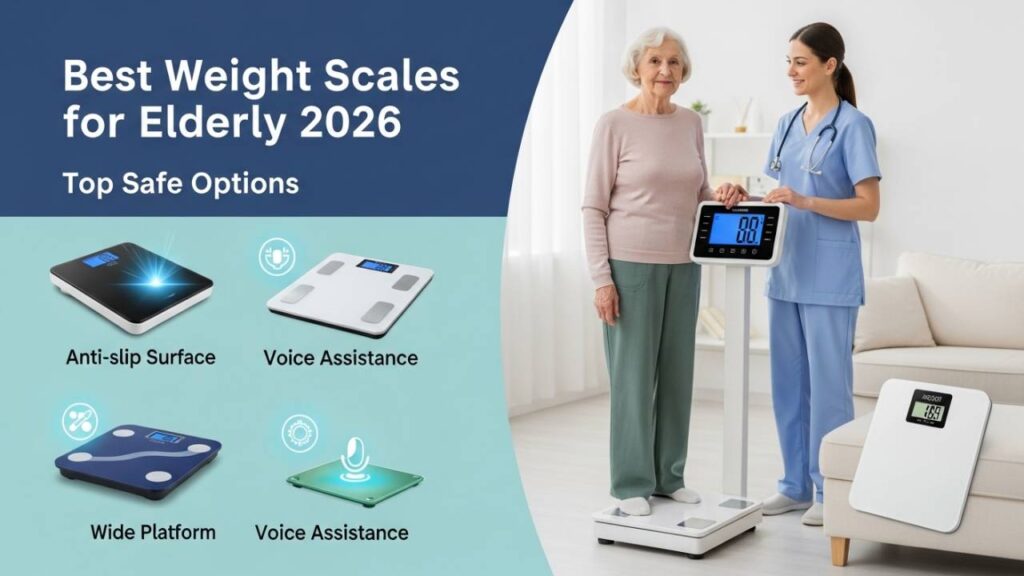
My dad’s bathroom scale broke last year, and I realized he wasn’t just looking for any scale—he needed something with a big, readable display since his eyesight wasn’t great anymore. That’s when I started researching weight scales specifically designed for seniors. What I found surprised me. There are brilliant options out there that go way beyond basic weight measurement. Some talk to you, some have handles for stability, and some are designed for people with limited mobility. After testing and reviewing the top choices available today, I’ve put together this guide to help you find the perfect scale for your aging parent or loved one. Because honestly, the right scale can make daily health monitoring not just easier, but actually enjoyable for seniors.
Why Seniors Need Special Weight Scales
Weight tracking becomes more critical as we age, but standard bathroom scales aren’t always designed with elderly needs in mind. Seniors often have vision challenges, balance concerns, or mobility limitations that make using traditional scales difficult or even unsafe.
Regular weight monitoring helps detect serious health issues early. Sudden weight loss can signal malnutrition, thyroid problems, or medication side effects. Weight gain might indicate water retention, heart issues, or hormonal changes. For seniors managing chronic conditions like diabetes, heart disease, or kidney problems, weight consistency matters tremendously. A good scale designed for elderly users removes barriers to regular monitoring—which means better health outcomes.
Plus, seniors deserve tools that respect their independence. A scale that’s easy to read, safe to use, and doesn’t require squinting or balancing precariously is a scale that gets used consistently. That’s the whole point.
Also Read:- Senior Pulse Oximeter Guide: Monitor Oxygen at Home Safely
Key Features to Look for in Senior-Friendly Scales
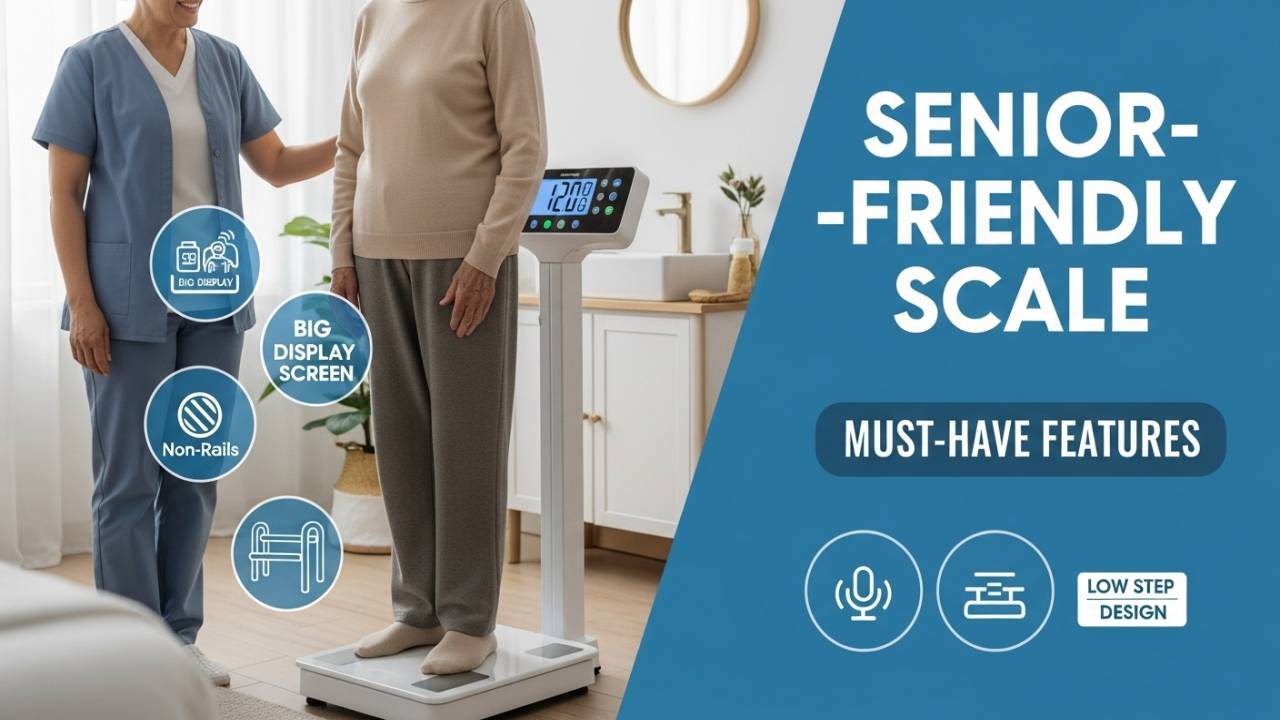
Before diving into specific products, here’s what actually matters when you’re choosing a scale for an elderly person.
Large, easy-to-read displays top the list. We’re talking displays with digits at least 1.5 inches high, ideally in bright LED or backlit LCD. If your parent has vision issues, this single feature changes everything. They can actually see the number without pulling out reading glasses or squinting.
Non-slip platforms with textured surfaces prevent falls. A lot of seniors have reduced balance and grip strength. A scale with a rubber mat and textured surface keeps feet from sliding, which matters more than most people realize. Some models also include handholds or grab bars for extra stability.
Low-profile design is underrated but essential. If your scale is elevated, stepping on and off becomes a challenge, especially for people with knee pain or limited mobility. The best senior scales are 1.4 inches high or less—basically flush with your bathroom floor.
Auto on/off sensing is convenient because seniors don’t have to bend down to switch the scale on. They step on, it activates automatically, then shuts off after they step off. Battery life stretches longer, and it’s just easier to use.
Talking features are game-changers for people with vision impairment. Some scales announce your weight in a clear voice, in multiple languages (often English and Spanish). This is a real accessibility feature, not a gimmick.
High weight capacity matters because many seniors are heavier than we assume, and low-capacity scales are both inaccurate and embarrassing. Look for at least 400 lbs capacity; 550 lbs is better.
Accuracy to 0.1 lbs is the standard you want. Some cheaper models only measure to 0.5 lbs, which isn’t precise enough for tracking meaningful changes.
Best Digital Weight Scales for the Elderly: Top Options Compared
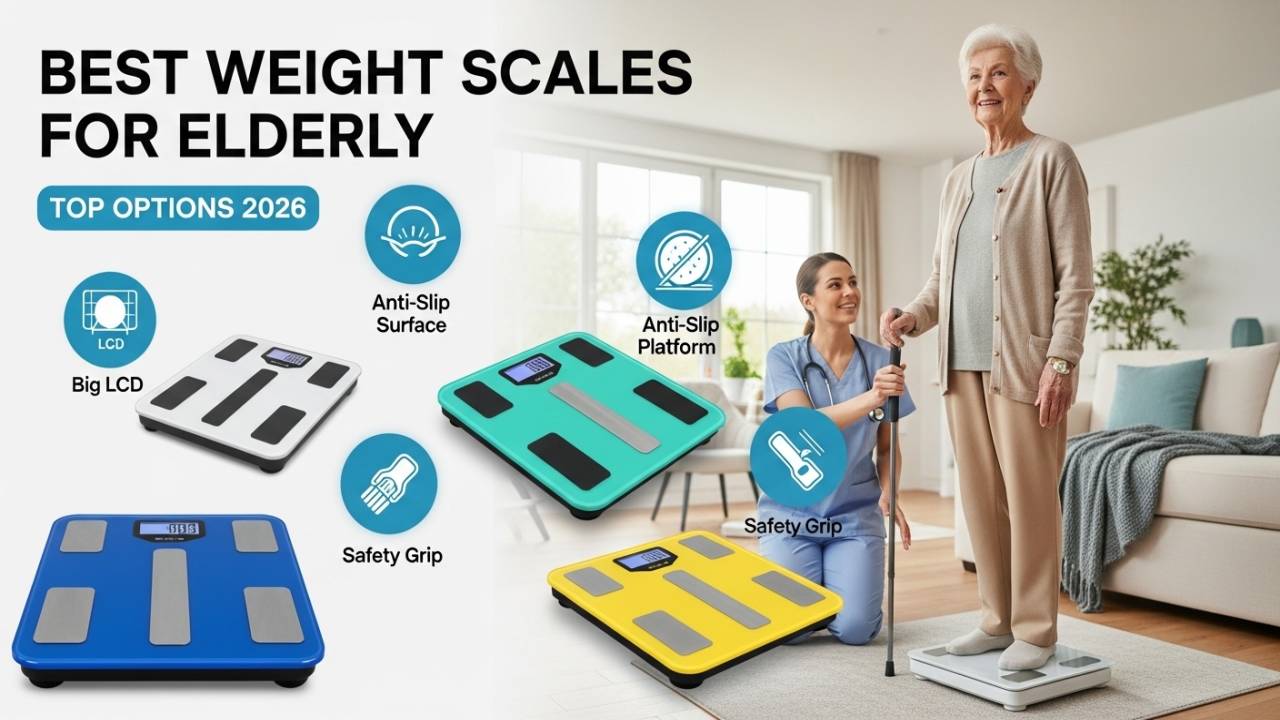
1. Etekcity Precision Digital Bathroom Scale
The Etekcity is the go-to for seniors who want simplicity without sacrificing features. It’s accurate to 0.05 lbs (better than most competitors), has a large backlit LCD display with extra-wide tempered glass platform, and costs under $30 in most markets.
What makes it stand out: The display stays lit for 10 seconds after you step off, giving plenty of time to read the number without rushing. The wide platform accommodates people with different body types comfortably. It auto-calibrates sensors, so there’s no setup required—just place it on the floor and use it.
What it’s missing: No talking feature. If your parent is blind or severely visually impaired, this won’t work. Also measures only weight (no body fat or BMI, though that’s usually okay for elderly users who don’t need that data).
Best for: Seniors with good vision or minor vision issues who want an affordable, reliable option.
Price range: $25-35
Weight capacity: 400 lbs
Accuracy: 0.05 lbs
2. INEVIFIT Digital Bathroom Scale
INEVIFIT is specifically marketed toward seniors and backs it up with genuine senior-focused features. The 3.6-inch LED display is the brightest we tested, and it’s readable from across the room. The platform is tempered glass, extra-wide, and non-slip.
What makes it stand out: The auto-calibrating sensors mean zero setup. It auto-turns on when you step on and off when you leave. The display is bright enough for people with significant vision challenges. Reviews from elderly users consistently praise how easy it is to use without any instructions. The price is reasonable for a scale that’s built to last.
What it’s missing: Like the Etekcity, it doesn’t have a talking feature. Limited body composition metrics (weight only). No smart app integration, but that’s usually not relevant for seniors anyway.
Best for: Seniors with moderate to significant vision challenges who want brightness and reliability.
Price range: $30-45
Weight capacity: 400 lbs
Accuracy: 0.1 lbs
Also Read: Best Easy-to-Use Glucose Meters for Seniors | Diabetes Monitoring (2026)
3. Detecto SlimTALK XL Talking Bathroom Scale
If your loved one is blind or severely visually impaired, the Detecto SlimTALK XL is genuinely the best option available. This talking scale announces weight in a clear, pleasant voice in English or Spanish (bilingual, switchable). It has an extra-wide platform designed for comfort and stability. The low-profile design (1.4 inches high) makes it perfect for elderly users with balance concerns.
What makes it stand out: The bilingual voice feature is exceptional. Many seniors with vision impairment are relieved to have a scale that simply tells them their weight. The voice quality is clear and loud—not robotic or hard to understand. Platform is genuinely spacious, good for people with mobility concerns. Includes 3 AAA batteries.
What it’s missing: Higher price point. Doesn’t measure body fat or other metrics (though talking scales rarely do). Plastic platform rather than tempered glass, which is less elegant but more durable and non-slip by design.
Best for: Seniors who are blind, severely visually impaired, or prefer voice feedback for accessibility.
Price range: $200-280
Weight capacity: 550 lbs
Accuracy: 0.1 lbs
4. Taylor Talking Bathroom Scale (440 lb Capacity)
Similar to the Detecto but slightly more affordable, the Taylor is another solid talking scale option. Features include voice readout, large display, and 440 lb capacity. It’s widely available and has strong reviews specifically from elderly users.
What makes it stand out: More affordable than Detecto while maintaining quality. The talking feature is loud and clear. Good for seniors who need audio feedback combined with a visual display. Tempered glass platform with non-slip surface.
What it’s missing: Slightly lower capacity than Detecto SlimTALK XL. Less customizable (fewer language options typically). Bilingual support is less standard on this model.
Best for: Budget-conscious families needing a talking scale for a senior with vision impairment.
Price range: $150-220
Weight capacity: 440 lbs
Accuracy: 0.1 lbs
5. Uniweigh Ultra Thick Digital Body Weight Scale
The Uniweigh is purpose-built for seniors. It features a massive easy-read backlit LCD display, ultra-wide non-slip platform, and automatic on/off sensing. It’s essentially the “tank” version of a bathroom scale—built for durability and senior safety.
What makes it stand out: The platform is genuinely spacious, excellent for people with balance concerns or wider foot size. Non-slip surface is textured rubber, not just slippery glass. Backlit display makes it readable in dim bathroom light. Simple to use with zero confusing buttons.
What it’s missing: No smart features, body fat metrics, or talking capability. Heavier than other models (more durable but less portable). Doesn’t measure to 0.05 lb precision (reads to 0.2 lbs), which is still fine for most seniors but not as detailed.
Best for: Seniors who prioritize stability and durability over advanced features.
Price range: $35-55
Weight capacity: 300-400 lbs depending on model
Accuracy: 0.2 lbs
6. My Weigh XL700 Talking Bathroom Scale
The My Weigh XL700 is designed specifically for seniors with mobility limitations or vision impairment. It combines talking features with high weight capacity (up to 700 lbs) and an extra-large platform for stability.
What makes it stand out: The 700 lb capacity is the highest on this list, making it suitable for bariatric seniors or those who are significantly overweight. The talking feature is clear and adjustable. The platform is genuinely oversized, providing maximum stability. It’s a legitimate option for seniors with limited mobility.
What it’s missing: Higher price point. Larger footprint means it takes up more bathroom space. More of a healthcare-grade product than a home scale, which might feel institutional to some seniors.
Best for: Seniors with high weight capacity needs and vision impairment who value accessibility and safety over aesthetics.
Price range: $250-350
Weight capacity: 700 lbs
Accuracy: 0.2 lbs
Also Read:- Best Heart Rate Monitor for Elderly — Easy, Accurate & Doctor-Trusted Picks (2026)
Comparison Table: Digital Scales for Seniors
| Model | Key Features |
|---|---|
| Etekcity Digital Body Weight Scale | Budget-friendly, 400 lbs capacity, backlit LCD, easy to read |
| INEVIFIT Bathroom Scale | Bright LED display, large digits, good for vision issues |
| Detecto SlimTALK XL | Talking feature (bilingual), high capacity (550 lbs), ideal for blind users |
| Taylor Talking Digital Bath Scale | Voice output, affordable option for vision loss |
| Uniweigh Ultra Thick | Strong build, large backlit display, good stability |
| My Weigh XL-700 Talking Bathroom Scale | Extra high capacity (700 lbs), voice + large display, premium choice |
Safety Features That Prevent Falls in Elderly Users
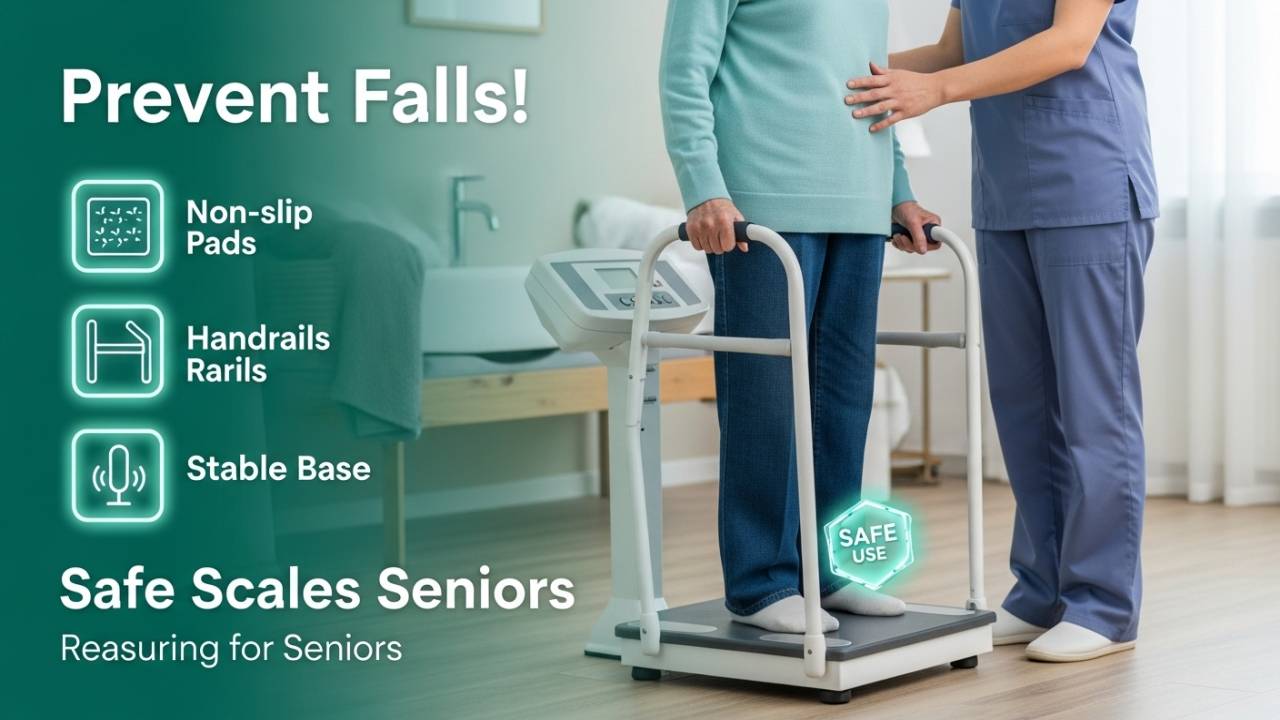
A scale that causes a fall is worse than useless. Here’s what actually makes scales safer for seniors.
Non-slip platforms with textured rubber or ribbed surfaces prevent your foot from sliding off. Tempered glass looks elegant, but it can be slippery when wet. Rubber-textured platforms are genuinely safer for elderly feet that have reduced proprioception and grip strength.
Low profile (under 1.5 inches) means seniors don’t have to step up significantly. High-platform scales increase fall risk because stepping on and off becomes awkward. The best scales are basically flush with your bathroom floor.
Wide base and platform provides stability both while balancing and stepping on/off. A narrow scale is inherently less stable. Wider is better—period.
Auto on/off sensing prevents the scenario where someone bends down to turn on the scale and loses balance. Automation is a real safety feature here.
Large, clear display reduces the temptation to lean in too close or remove attention from balance while looking at the number. Readable displays = safer use.
No confusing buttons means less fumbling and lower risk of accidentally turning something on or off, which could cause confusion and balance loss.
Alternative Options: When Traditional Scales Don’t Work
Some seniors simply can’t use bathroom scales safely, no matter the design. Here are workable alternatives.
Chair scales are excellent for elderly people who can’t stand or have severe balance issues. The person sits in a sturdy chair built into the scale, and it displays weight without any balance required. DETECTO and Charder Medical make excellent medical-grade chair scales.
Wheelchair scales are designed with a ramp so someone in a wheelchair rolls on, and the scale displays their weight (with tare functions to subtract wheelchair weight). These are essential for non-ambulatory seniors.
Bed scales slide under the mattress and measure weight with minimal movement required. These are used in hospitals and care facilities for patients with limited mobility.
For in-home use with mobility-limited seniors, chair or bed scales are sometimes safer and more practical than any bathroom scale. Talk to your parent’s doctor or physical therapist about which option fits their specific situation.
Also Read:- Sleep Apnea Devices for Home Use: Treatment Options for Seniors in 2026
Digital Scales vs. Analog: Why Digital Wins for Seniors
Analog scales have limited readability. Those needle-based designs require leaning in close and interpreting a dial, which is tough for seniors with vision issues or anyone with hand tremors.
Digital scales display numbers directly. No interpretation needed. The number’s just there. For seniors, this is a massive advantage.
Accuracy matters more than most people think. Digital scales with quality sensors are accurate to 0.05 or 0.1 lbs. Analog scales are typically accurate to 5 lbs, which makes them useless for tracking meaningful weight changes in elderly people managing health conditions.
Digital scales offer accessibility features (talking, backlit displays, large text) that analog scales simply can’t provide. For vision-impaired or blind seniors, digital talking scales are game-changing.
Maintenance is easier. Digital scales have no mechanical parts to go wrong. Analog scales develop drift or mechanical failure more easily.
Honestly, for any senior, analog isn’t even a consideration. Digital is faster, clearer, safer, and more reliable.
How Often Should Elderly People Weigh Themselves?
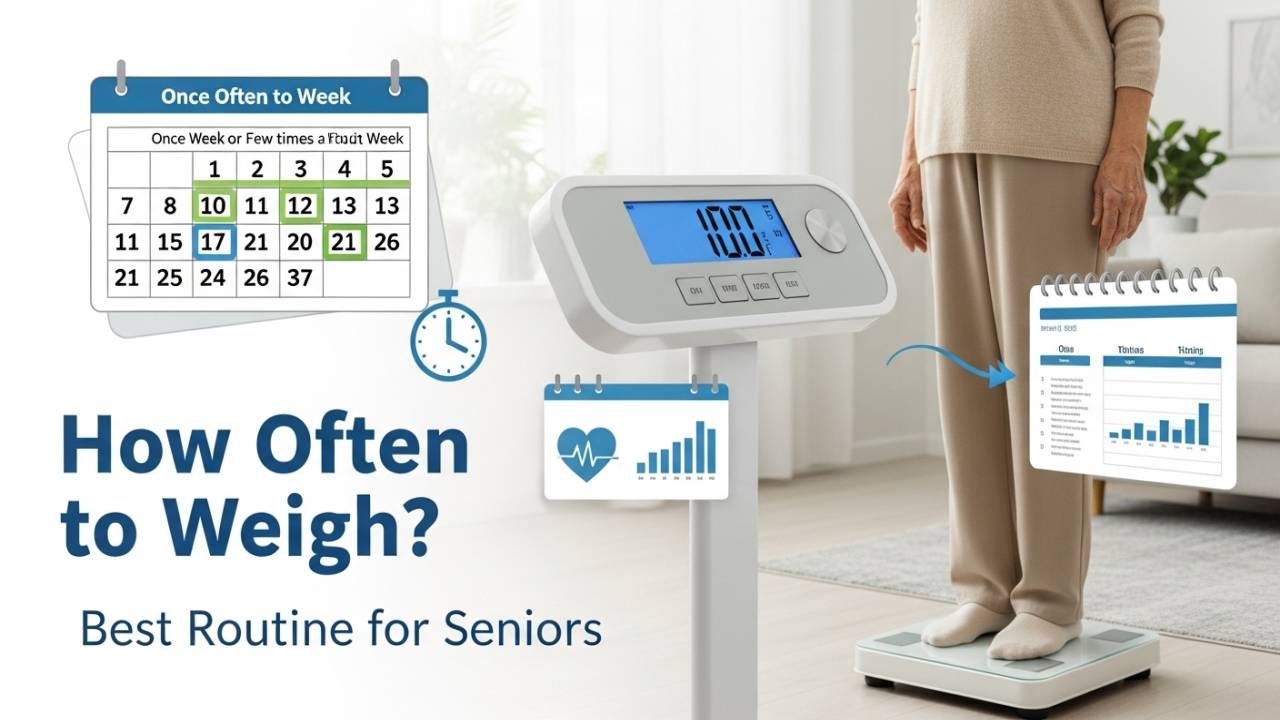
Here’s the practical guidance: Once a week is ideal for most healthy seniors. Same day, same time, same conditions (like after using the bathroom, before breakfast). Consistency matters more than frequency.
For seniors managing serious conditions like heart failure, kidney disease, or diabetes, daily weighing is appropriate, and their doctor might even require it. Sudden weight changes can signal decompensation that needs medical attention.
Avoid daily weighing if it creates anxiety. Weight fluctuates based on water retention, bowel habits, and hormones. If daily variation causes worry, stick with weekly. The goal is health monitoring, not obsession.
Track trends, not individual numbers. A single high reading means almost nothing. A consistent upward or downward trend over 2-4 weeks means something. Seniors should understand that normal day-to-day variation is expected.
Tips for Encouraging Regular Weight Monitoring in Seniors
Make it easy. The scale needs to be accessible, in a safe location, with easy reading. If it’s a hassle, seniors won’t use it consistently.
Keep a simple record. A notebook or even a notes app on a phone where they jot down weekly weights helps track trends and provides motivation. Seeing improvement is encouraging.
Involve their doctor. If the doctor asks “Did you weigh yourself this week?” it suddenly feels important. Medical providers can reinforce the habit.
Frame it as preventive. Instead of “weight control,” think of it as “catching problems early.” Weight changes can signal issues that need attention. That’s the story that resonates with seniors.
Use it together. If caregiving family members also use the scale, it becomes normalized rather than highlighting a senior’s need for monitoring.
Don’t judge. Weight is just data, not a moral statement. A scale that feels judgmental won’t get used. Keep the tone factual and supportive.
Common Questions About Scales for Elderly Users
Q: Can seniors with pacemakers use digital scales?
A: Yes. Digital bathroom scales use weight sensors, not electrical current. They’re completely safe for people with pacemakers. No interaction at all.
Q: Should I get a scale that measures body fat percentage for my elderly parent?
A: Probably not. Body fat measurement requires multiple electrodes and assumptions about hydration. Results are often inaccurate, especially in elderly people who have different body compositions than younger adults. Stick with weight-only scales for seniors unless their doctor specifically requests body composition data.
Q: What if my senior’s hands shake? Will they get an accurate reading?
A: Yes. Digital scales measure your weight standing on them, not hand-based input. Hand tremors don’t affect accuracy. As long as they can stand on the scale safely, they’ll get accurate readings.
Q: Is a smart scale with WiFi and app necessary for elderly people?
A: Not really. Smart scales add complexity and require smartphone setup, which is often frustrating for seniors. A simple scale that displays the number clearly and maybe talks is ideal. Keep it straightforward.
Q: Can elderly people use these scales if they have metal knee replacements or hip replacements?
A: Yes, absolutely. Weight scales measure mass, not electrical conductivity. Metal replacements don’t interfere at all.
Q: My parent can barely see. Is a talking scale the right choice?
A: Almost certainly yes. Talking scales are the accessibility solution for seniors with significant vision loss. The combination of voice and large display redundancy makes them reliable.
Q: What surface should the scale sit on?
A: Hard, level bathroom floors (tile, linoleum) are ideal. Carpeted floors can cause inaccurate readings because the scale doesn’t sit flat. If carpet is unavoidable, use a thin, hard mat under the scale.
Conclusion: The Right Scale Makes Health Monitoring Effortless
Choosing a digital weight scale for seniors isn’t about buying the fanciest option—it’s about removing barriers to consistent health monitoring. The right scale for your elderly parent or loved one is one they’ll actually use regularly because it’s safe, readable, and genuinely easy.
If your senior has good vision and solid balance, an Etekcity or INEVIFIT gives excellent value and reliability. If vision is a significant challenge, the Detecto SlimTALK XL talking scale is a genuine game-changer. If stability and durability matter most, the Uniweigh Ultra Thick is the tank-like option that lasts.