Your knees ache when you stand up. Your hands hurt when you button your shirt. You catch yourself avoiding that morning walk because bending your hips feels like punishment.
If you’re a senior dealing with joint pain, you’re not alone. More than 1 in 4 Americans over 65 struggle with some form of arthritis. And here’s the brutal truth that nobody talks about: joint pain isn’t just about discomfort—it’s about losing your independence.
But here’s what most doctors don’t tell you: there’s no single “best” solution for joint pain. Instead, there are proven solutions that work together in a strategic sequence. Some start working in hours. Others take weeks or months. And the difference between living with pain and living pain-free often comes down to knowing exactly which treatment to try first, when to add another, and when to escalate to something stronger.
This guide walks you through every option—from the simple changes you can start today to advanced treatments available only through specialists. More importantly, you’ll learn how to build a personalized pain-relief strategy that actually works for YOUR body, YOUR lifestyle, and YOUR budget.
The Hidden Cost of Waiting for “Perfect” Relief
Before we jump into solutions, let’s talk about what happens when you don’t address joint pain strategically.
Many seniors tell themselves, “I’ll just tough it out” or “this is normal aging.” They lose weight because climbing stairs for groceries becomes too painful. They stop visiting grandkids because car rides hurt. They skip social events. They start taking more pain medication, which causes side effects, which leads to other medications to offset those side effects.
Within 2-3 years of untreated joint pain, many seniors have lost:
- 40% of their strength (from reduced activity)
- Independence in daily tasks (getting dressed, grooming, cooking)
- Cognitive health (inactivity increases dementia risk)
- Social connection (isolation from pain and reduced mobility)
The financial cost is staggering. Joint replacement surgery costs $30,000-$50,000. Emergency interventions for falls (caused by compensation from joint pain) run $35,000 on average. Years of chronic pain medication can cost $200-$400 monthly.
But here’s the good news: most of this is preventable.
Starting a simple, strategic pain-relief approach now—before pain becomes severe—can add years of active, independent life. And it doesn’t require expensive surgery or becoming a medicine cabinet on legs.
Understanding Your Pain: What Type of Arthritis Do You Have?

Before choosing treatment, you need to know what you’re treating. Joint pain comes from different causes, and some require different approaches than others.
Osteoarthritis (OA): This is “wear and tear” arthritis—cartilage gradually wears down over time. It’s the most common type, affecting 33 million Americans. OA typically affects knees, hips, hands, and spine. Pain usually worsens with activity and improves with rest initially (but worsens if completely still).
Rheumatoid Arthritis (RA): This is an autoimmune disease where your immune system attacks joints. RA typically causes symmetrical pain (both hands hurt, not just one) and morning stiffness lasting more than an hour. About 1.3 million Americans have RA.
Other types: Gout (sudden, severe attacks), psoriatic arthritis (if you have psoriasis), and others. Each type benefits from different primary treatments.
Your next step: If you haven’t been formally diagnosed, schedule an appointment with your primary care doctor or a rheumatologist. A simple blood test and X-ray can confirm what you’re dealing with. This dramatically improves treatment success.
Also Read:- How to Manage Arthritis Pain in Elderly: Top Devices & Solutions for Real Relief
The Treatment Sequence That Actually Works: Start Simple, Escalate Strategically
This is the part nobody explains clearly. Most doctors list treatment options but don’t tell you the sequence. Should you start with supplements or medications? When is physical therapy appropriate? When should you consider injections?
Here’s the proven progression that maximizes results while minimizing side effects and cost:
Phase 1: Conservative Treatments (Start Here—Immediate)
These are the foundation. Everyone should start here, regardless of pain severity. They’re low-cost, low-risk, and remarkably effective for many people.
Physical Activity: The #1 Treatment (Yes, Really)
This might sound backward—”Move more when it hurts?”—but this is the single most effective treatment for joint pain. Research from the NIH and Arthritis Foundation is unequivocal: exercise works better than many medications at reducing pain and improving function.
Why? Movement:
- Strengthens muscles around joints (taking pressure off cartilage)
- Improves joint lubrication (synovial fluid distribution)
- Releases endorphins (natural pain killers)
- Maintains joint range of motion (prevents stiffness)
- Improves bone density (prevents falls and fractures)
Best exercises for arthritic joints:
- Walking (start with 10-15 minutes daily, build to 30)
- Swimming or water aerobics (zero joint stress)
- Stationary cycling (low-impact, strengthens legs)
- Tai chi (improves balance, reduces falls, calms mind)
- Resistance bands (gentle strength building)
Timeline to notice improvement: 2-4 weeks of consistent activity. Most people notice relief within 3-6 weeks.
Cost: $0-$150/month for gym or classes. Many YMCAs and senior centers offer discounted arthritis-specific classes (Walk With Ease, Fit & Strong!) for $0-$50.
Important for seniors: Start slowly. If you’ve been sedentary, even 10 minutes of walking daily makes a difference. Work with a physical therapist for the first 2-4 weeks to learn proper form (bad form increases pain).
Weight Management: The Math Is Powerful (1 lb = 4 lbs Relief)
For every single pound you lose, your knees experience 4 pounds less pressure. If you’re 20 pounds overweight, your knees are dealing with 80 pounds of extra load. That’s a significant burden on cartilage.
Here’s the realistic approach: You don’t need to reach your “ideal” weight. Losing just 5-10% of body weight shows measurable improvement in joint pain and function. A 200-pound person losing 10 pounds (5%) will experience noticeable knee pain reduction.
How to approach weight loss with joint pain:
- Don’t start with exercise alone (joints hurt too much for rapid weight loss through activity)
- Focus on diet first: reduce processed foods, increase vegetables, maintain protein
- Work with a dietitian (many insurance plans cover this, ask your doctor for a referral)
- Pair with gentle movement once pain decreases
Timeline: 8-12 weeks to notice significant improvement. Weight loss is gradual; expect 1-2 pounds per week with dietary changes.
Cost: $0 (home cooking) to $200+/month (dietitian consultation). Most insurance covers 4-6 nutritionist visits annually.
Sleep & Rest: The Often-Forgotten Necessity
Pain is worse when you’re fatigued. Poor sleep increases pain perception and reduces your body’s ability to heal. But sleeping with joint pain is torture.
Sleep optimization for joint pain:
- Use extra pillows for joint support (pillow between knees if side sleeper, under knees if back sleeper)
- Apply heat before bed (warm shower, heating pad 15 minutes)
- Keep bedroom cool (65-68°F is ideal)
- Avoid sleeping in positions that stress painful joints
- Consider a mattress designed for pressure relief (see section on mattresses below)
Timeline: Improvement in pain intensity within 3-7 days of better sleep.
Cost: $0-$1,500 for a quality mattress. (See below for mattress guide.)
Environmental Modifications: Small Changes, Big Impact
Sometimes the simplest changes reduce pain the most.
Footwear matters. Shoes with:
- Arch support (flip-flops and flat shoes increase joint load)
- Cushioning (running shoe quality)
- Proper heel-to-toe drop
Change just your shoes, and knee pain often improves 15-20%.
Household modifications:
- Grab bars in bathrooms (reduces fall risk and joint stress)
- Jar openers and ergonomic tools (reduce hand strain)
- Elevated toilet seats (easier standing from sitting)
- Lightweight vacuum (or cordless, easier to maneuver)
Timeline: Immediate (better support while walking is felt right away)
Cost: $50-$300 depending on tools and modifications needed
Also Read:- Arthritis Pain Relief Devices for Seniors: The Complete 2026 Guide That Actually Works
Mental Health & Stress Management: The Overlooked Treatment
Chronic pain causes depression and anxiety in 40% of arthritis patients. And here’s the vicious cycle: stress and depression increase pain perception, which increases stress.
Evidence-based approaches:
- Cognitive behavioral therapy (teaches pain coping skills)
- Mindfulness and meditation (reduces pain intensity 15-30%)
- Social connection (isolated seniors report more pain)
- Counseling (many insurance plans cover mental health)
Timeline: 2-4 weeks to notice mood improvement and reduced pain catastrophizing
Cost: $0 (free apps like Insight Timer, Headspace) to $150/month for therapy. Many insurance plans cover therapy fully or partially.
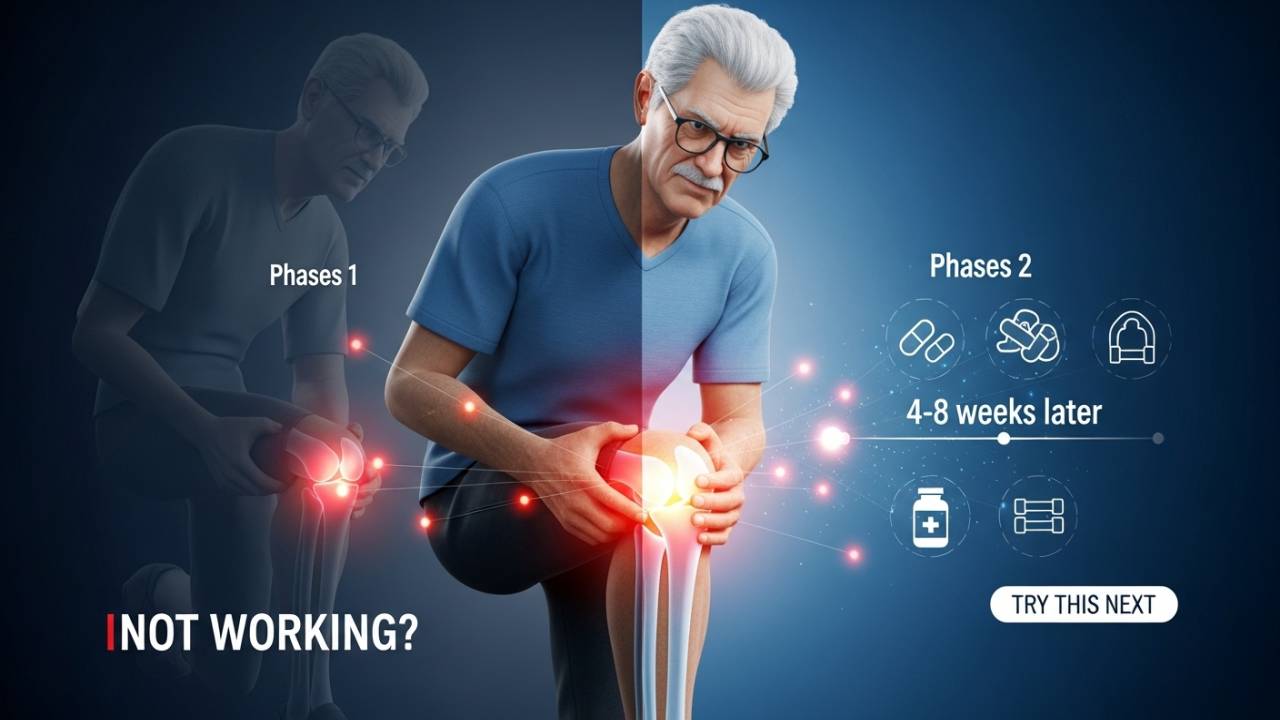
Phase 2: Add These If Phase 1 Alone Isn’t Enough (Usually 4-8 Weeks In)
Physical Therapy: Professional Joint Rehab
Physical therapists are joint experts. A good PT can:
- Design exercises specific to YOUR joint problems
- Correct movement patterns that increase pain
- Provide hands-on treatments (massage, joint mobilization)
- Fit you for proper braces/support devices
- Track progress and adjust treatment
Research shows: PT combined with home exercise is as effective as surgery for many joint conditions.
What to expect:
- Initial evaluation (30-45 minutes)
- 1-2 sessions per week for 6-12 weeks
- Home exercise program to do daily
- Progress reassessment every 2-4 weeks
Timeline: Significant improvement usually by week 6-8 of consistent PT (2x/week)
Cost: $50-$150 per session. Most insurance (including Medicare) covers 30 visits/year with doctor’s referral. Cost per month: $400-$600 for 2 sessions/week.
Pro tip: Ask your doctor for a PT referral and ask specifically for “arthritis management PT” or “joint protection training.”
Topical Medications: Direct Pain Relief Without Systemic Effects
These are creams and gels you rub directly on painful joints. They provide local pain relief without the whole-body side effects of oral medications.
Most common topical options:
| Product Type | Main Ingredient | What It Does | Timeline | Cost |
|---|---|---|---|---|
| NSAIDs (Diclofenac) | Diclofenac (prescription) | Reduces local inflammation | 15-30 minutes | $20-$40/month (Rx), $15-$25 OTC |
| Capsaicin cream | Chili pepper extract | Depletes pain-signaling chemicals | 3-7 days of use | $10-$20 |
| Menthol creams | Menthol | Creates cooling sensation, distracts from pain | 10-20 minutes | $5-$12 |
| Combination creams | NSAIDs + Capsaicin + Menthol | Multiple mechanisms | 15 min to 3 days | $15-$30 |
Best for: Knee, hand, shoulder arthritis. Less effective for hip or spine pain.
Pros: No systemic side effects, can use multiple times daily, no drug interactions
Cons: Localized effect only, skin irritation possible, takes time (capsaicin especially)
Cost: $0.50-$1.00 per day
Supplements: The Evidence-Based Ones (Plus the Ones to Skip)
This is where nutrition gets controversial. Some supplements have real research; others are marketing hype.
Supplements WITH strong evidence:
- Curcumin (turmeric)
- Dose: 1,000-1,500mg daily
- Timeline: 4-12 weeks to notice improvement
- Evidence: In one study, 1,500mg curcumin worked as well as 1,200mg ibuprofen
- Cost: $10-$20/month
- Caution: Can interact with blood thinners; tell your doctor
- Fish Oil (Omega-3)
- Dose: 1,000-2,000mg daily
- Timeline: 4-12 weeks
- Evidence: Strong anti-inflammatory effects, particularly helps RA
- Cost: $8-$15/month
- Caution: Can increase bleeding; mention to your doctor
- SAM-e
- Dose: 1,200-1,600mg daily
- Timeline: 4-8 weeks
- Evidence: Similar to NSAIDs for OA pain in some studies
- Cost: $20-$35/month
- Caution: Expensive; some people report mood elevation (good for depression)
Supplements with WEAK evidence (probably not worth your money):
- Glucosamine/Chondroitin: Mixed research; most high-quality studies show no better than placebo
- CBD: Promising but not well-studied in humans; expensive
- Vitamins/minerals: Unless you’re deficient, supplementation doesn’t help
The supplement timeline problem: Most people try supplements for 2 weeks and quit (“it’s not working”). True timeline is 4-12 weeks. Be patient.
Cost: $10-$40/month for effective supplements
Also Read:- Best Fall Detection Devices for Seniors 2026 [Reviewed & Tested]
Over-the-Counter Medications: When to Use Them
| Medication | Best For | Typical Dose | How Long Until Relief | Cautions for Seniors |
|---|---|---|---|---|
| Ibuprofen (Advil) | Acute pain, inflammation | 200-400mg every 6 hours (max 1,200mg/day OTC) | 20-30 minutes | GI issues, kidney problems, ulcers; don’t use long-term without doctor |
| Naproxen (Aleve) | Long-lasting relief | 220mg every 8-12 hours | 30 minutes | Same GI/kidney cautions; lasts longer than ibuprofen |
| Acetaminophen (Tylenol) | Mild pain | 325-500mg every 4-6 hours (max 3,000mg/day) | 20-30 minutes | Liver damage if overused; check other medications (many contain acetaminophen) |
| Diclofenac topical (Voltaren) | Localized pain | Apply to joint 3-4x daily | 15-30 minutes | Safer than oral NSAIDs; minimal systemic absorption |
When to avoid NSAIDs: If you have history of ulcers, kidney disease, heart disease, or are on blood thinners. Ask your doctor.
Cost: $5-$15/month
Critical note for seniors: Many people take multiple medications containing acetaminophen or NSAIDs without realizing it. Check all your medications. Taking too much is dangerous.
Phase 3: If Phases 1-2 Aren’t Enough (Usually 8-12 Weeks In)
Joint Injections: Rapid, Localized Relief
If lifestyle changes, PT, and oral medications aren’t providing adequate relief, joint injections are the next logical step—before considering surgery.
Two main types:
1. Corticosteroid Injections
- What it is: A strong anti-inflammatory medication injected directly into the joint
- Timeline to relief: Usually 3-7 days; peaks at 2-4 weeks
- Duration: 3-6 months (varies)
- How often: Can be done 3-4 times per year (more frequent risks cartilage damage)
- Cost: $200-$600 per injection (often covered by insurance)
- Best for: Acute flare-ups, quick relief needed
- Cons: Only temporary; repeated use may damage cartilage over time
2. Hyaluronic Acid Injections
- What it is: Synthetic joint fluid injected to lubricate and cushion the joint
- Timeline: Slower than steroids (2-3 weeks to full effect) but lasts longer
- Duration: 6-12 months
- How often: Series of 3-4 injections weekly; repeatable annually
- Cost: $300-$900 per injection; $1,200-$3,600 for series (often covered by insurance)
- Best for: Long-term management; knees particularly
- Cons: Multiple appointments needed; slower onset than steroids
The injection strategy: Combine injections with PT and home exercise. Injections buy you pain relief while you rebuild strength and flexibility. Without the exercise component, pain returns when the injection wears off.
Prescription Pain Medications: Use as Last Resort Before Surgery
If you’ve exhausted conservative and procedural options, prescription medications are available.
Types:
| Medication | Type | Typical Dose | When It Works | Issues for Seniors |
|---|---|---|---|---|
| Tramadol (Ultram) | Mild opioid | 50-100mg every 4-6 hours | Moderate pain relief | Risk of dependence, constipation, fall risk |
| Duloxetine (Cymbalta) | SNRI antidepressant | 30-60mg daily | Chronic OA pain (FDA approved for this) | Dizziness, dry mouth, sexual side effects |
| Gabapentin (Neurontin) | Nerve pain medication | 300mg 3x daily, up to 3,600mg | Neuropathic arthritis pain | Dizziness, cognitive impairment, falls |
Important for seniors: Opioids (narcotic pain killers) are NOT first-line treatment for arthritis. They increase fall risk, constipation, confusion, and dependence. Use only if absolutely necessary and for short-term acute pain.
Cost: $20-$100/month depending on medication and insurance
Phase 4: Advanced Interventions (Only After All Above Fail)
Radiofrequency Ablation (RFA): High-Tech Nerve Pain Relief
This is a minimally invasive procedure where a doctor uses radiofrequency energy to “turn off” the nerves sending pain signals from a joint.
- Process: Doctor inserts needle near the joint under X-ray or ultrasound guidance, passes radiofrequency current through to ablate (burn) nerve endings
- Duration: 20-30 minute procedure, done as outpatient
- Timeline to relief: 2-3 weeks; full effect at 4-6 weeks
- Duration: 9-18 months (varies)
- Cost: $2,000-$5,000 per joint (often covered by insurance for Medicare patients with failed conservative treatment)
- Best for: Severe pain from OA where injections haven’t worked and surgery isn’t desired
- Cons: Temporary; needs to be repeated
Joint Replacement Surgery: The Last Resort
Surgery is appropriate when:
- Pain is severe and interfering with basic function (walking, self-care)
- Conservative treatment has been exhausted (6+ months of PT, injections, etc.)
- Imaging shows significant joint damage
- Patient is generally healthy enough for surgery
Common joint replacements:
- Knee replacement: $30,000-$50,000; success rate 85-90%; lasts 15-20+ years
- Hip replacement: $35,000-$50,000; similar success rate and longevity
- Shoulder replacement: $40,000-$60,000; less commonly needed
Recovery timeline: 6-12 months for full healing; many people notice improvement within 6 weeks
Cost: Significant but usually covered by Medicare (80-90%) or insurance after deductible
The Real Stories: How Seniors Actually Found Relief
These aren’t marketing cases. These are common patterns in how seniors address joint pain.
Story 1: Margaret, 68, Knee Pain from Decades of Running

“I didn’t think I could be active anymore.”
Margaret loved running but developed severe knee OA in her late 60s. She tried different approaches:
- Started walking instead of running (easier on joints)
- Lost 12 pounds (small amount made surprising difference)
- Worked with PT for proper walking mechanics
- Added curcumin supplement (8 weeks before noticing help)
- Uses topical diclofenac before hiking
Result: After 3 months, she returned to hiking 3x/week, walks 5 miles regularly, pain is manageable with topical creams.
Cost per month: ~$50 (PT was main expense; now does home exercises)
Story 2: Robert, 72, Rheumatoid Arthritis with Morning Stiffness
“My hands were so bad I couldn’t hold my grandkids.”
Robert had RA (autoimmune arthritis), causing severe morning stiffness. He combined approaches:
- Started low-impact water aerobics (no joint stress, improved strength)
- Asked rheumatologist about medications (started biological agent)
- Used heat therapy every morning (warm shower before activity)
- Added fish oil supplement (helped with inflammation)
- Attended PT 2x/week for hand/wrist strengthening
Result: Within 8 weeks, morning stiffness reduced from 2 hours to 20 minutes. Pain manageable. Can hold grandchildren comfortably.
Cost per month: ~$400 (mostly PT; medication covered by insurance)
Story 3: Carol, 75, Multiple Joints, Sedentary for 5 Years
“I had given up. I thought this was just how aging worked.”
Carol had accepted pain as part of aging. She started:
- With realistic goals (10-minute daily walks, not marathons)
- Water aerobics class (fun social component helped motivation)
- Weight management (lost 8 pounds over 4 months)
- Joint injections when pain flared (gave her relief to exercise)
Result: After 6 months, back to gardening, golfing once monthly, independent in all ADLs. Pain still present but manageable and doesn’t limit life.
Cost per month: ~$150 (class + occasional injection coverage)
Decision Framework: Which Treatment Should YOU Start With?
Here’s a simplified decision tree:
START HERE:
- Physical activity (walking, water aerobics, tai chi) – every patient
- Weight management if overweight
- Sleep optimization and stress management
- Proper footwear and joint protection
ADD AFTER 4 WEEKS IF PAIN PERSISTS:
- Physical therapy 2x/week
- Topical medications (NSAIDs or capsaicin)
- Curcumin or fish oil supplements
CONSIDER AT 8-12 WEEKS IF STILL STRUGGLING:
- Oral OTC pain medications as needed
- Prescription medications (only if above ineffective)
- Joint injections (corticosteroid or hyaluronic acid)
CONSIDER AT 6+ MONTHS IF PAIN LIMITS FUNCTION:
- Radiofrequency ablation
- Joint replacement surgery (only after all above)
Also Read:- Best Health Record Apps for Seniors: Digital Health Management Made Easy
Timeline Expectations: When Should You Notice Improvement?
This is crucial information. Giving up too early is common because people don’t know how long treatments take.
| Treatment | How Long Until You Notice | How Long Until Full Effect | Duration of Relief |
|---|---|---|---|
| Physical activity | 2-4 weeks | 8-12 weeks | Ongoing (maintain with activity) |
| Weight loss | 4-8 weeks | 12+ weeks | Ongoing |
| Physical therapy | 3-4 weeks | 8-12 weeks | Ongoing (maintain with exercises) |
| NSAIDs (oral) | 20-30 minutes | Same day | Until medication wears off (4-6 hours) |
| Topical creams | 10-30 minutes | 15 minutes to 1 week | 4-8 hours per application |
| Supplements (curcumin, fish oil) | 4-6 weeks | 8-12 weeks | Ongoing (maintain dosage) |
| Corticosteroid injection | 3-7 days | 2-4 weeks | 3-6 months |
| Hyaluronic acid injection | 1-2 weeks | 3-6 weeks | 6-12 months |
| Radiofrequency ablation | 2-3 weeks | 4-8 weeks | 9-18 months |
Critical insight: Most people judge treatments by week 2. But many don’t reach full effect until week 6-12. Patience is essential.
Cost Breakdown: What You’ll Actually Pay
Being transparent about cost is crucial because finances often drive treatment decisions.
Conservative Phase (Per Month)
- Gym/exercise class: $0-$100
- Dietitian consultation: $0 (often insurance covered)
- Topical creams: $10-$30
- Supplements: $20-$40
- OTC medications: $10-$20
- Total: $40-$190/month
With Physical Therapy (Per Month)
- Everything above: $40-$190
- PT sessions (2x/week, insurance covers 30/year): $400-$800
- Total: $440-$990/month (but usually only needs 8-12 weeks)
With Joint Injections (One-Time Cost)
- Corticosteroid injection: $200-$600 per injection (usually 1 per year)
- Hyaluronic acid series (3-4 injections): $1,200-$3,600 per year
Prescription Medications (Per Month)
- Most common: $20-$100/month
Surgery (One-Time Cost)
- Joint replacement: $30,000-$50,000 (usually 80-90% covered by Medicare/insurance)
- Out-of-pocket after insurance: $3,000-$10,000
Bottom line: Conservative approaches cost $40-$200/month. Surgery costs one-time but is $3,000-$10,000 out-of-pocket. Starting conservatively now saves money and delays or prevents surgery.
The Medication Safety Talk: What Every Senior Needs to Know

Seniors take an average of 4-5 medications. Adding arthritis medications increases interactions and side effects.
Critical questions for your doctor:
- “Does this new medication interact with what I’m already taking?”
- “Could this medication contribute to falls, dizziness, or confusion?”
- “How will this affect my liver or kidneys?” (especially important for seniors)
- “What should I avoid while taking this?”
- “When should I see improvement? If not, when should I call you?”
Red flags with arthritis medications:
- NSAIDs can increase blood pressure, blood clots, and ulcers in seniors
- Tramadol increases fall risk and confusion
- Many supplements interact with blood thinners
- Acetaminophen overdose happens when people don’t realize it’s in multiple products
Medication review tip: Bring all medications (even supplements and OTC) to your next appointment. Ask your pharmacist to check for interactions.
FAQ: What Seniors Actually Ask
“How do I know which joint pain treatment will work for me?”
Trial and error is normal. Most people try 2-3 approaches before finding what works. Keep notes: which treatment, when you started, how you felt weekly. This pattern helps your doctor adjust your plan.
“Is it OK to use heat and cold at the same time?”
Yes, but separately. Heat before activity (warms up joint, improves flexibility). Cold after activity (reduces inflammation and swelling). Most people do heat in morning, cold in evening.
“Should I rest my painful joint or exercise it?”
Exercise. Complete rest actually makes arthritis worse by increasing stiffness. The key is moving within your pain tolerance—not through severe pain, but not avoiding mild discomfort either.
“My insurance won’t cover PT. What should I do?”
Ask your doctor for a referral. Medicare covers 30 sessions/year with doctor’s referral. If private insurance denies, ask your doctor to appeal or request “medical necessity.” Many senior centers and YMCAs offer affordable arthritis-specific exercise classes ($30-$50/month).
“Why does my pain change day to day if I’m doing the same things?”
Barometric pressure, sleep quality, stress, activity level the previous day, inflammation cycles—all affect pain. This is normal. Don’t judge a treatment by one bad day; look at weekly trends instead.
“Can I ever stop taking pain medication once I start?”
For many treatments: yes. PT, exercise, and weight loss often reduce pain enough to reduce or stop medications. For disease-modifying medications (for RA), stopping usually causes pain to return. Talk to your doctor about tapering.
“Is surgery inevitable if I have arthritis?”
No. Many people manage arthritis pain indefinitely without surgery. Surgery is for people whose quality of life is significantly impaired despite conservative treatment.
“How long will joint replacement last?”
Most last 15-20 years. Younger people (who may outlive implants) need planning for potential revision surgery. Discuss longevity with your surgeon.