Your mom mentioned during a phone call that she “forgot” to check her blood pressure again. Your dad brushes it off, saying the doctor visit is “enough.” Yet nearly half of all American adults struggle with high blood pressure—and seniors face even higher stakes. The real danger? Most don’t know their readings are climbing until it’s almost too late.
The truth is, high blood pressure doesn’t announce itself. There are no warning sirens, no obvious signs. That’s what makes it the “silent killer.” But here’s the good news: checking your BP at home changes everything.
A reliable home blood pressure monitor gives you real power. You get daily readings. You spot trends before they become crises. You catch what the doctor’s office might miss. And best of all? You feel in control of your own health again.
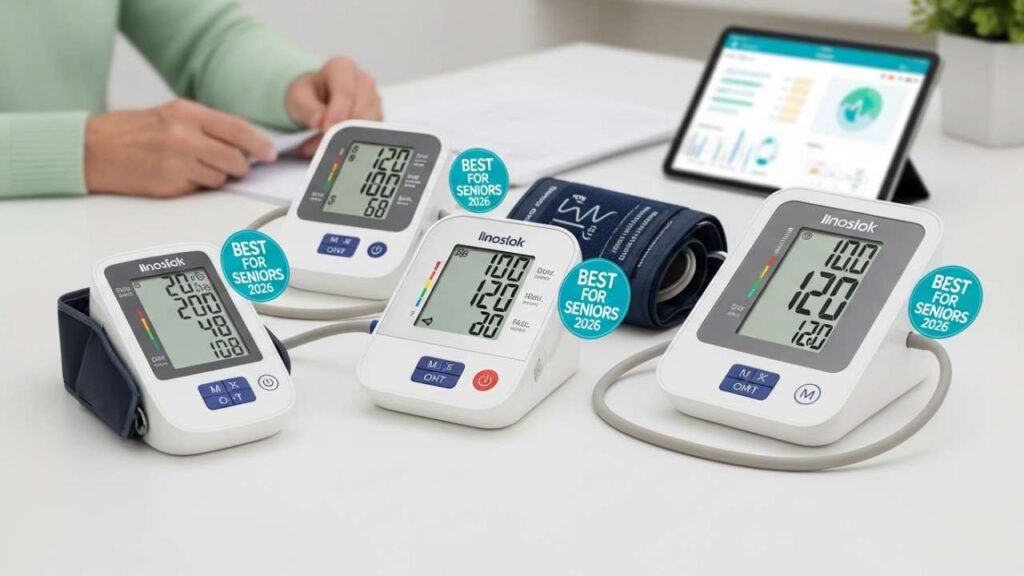
After testing and comparing monitors designed specifically for seniors, we found which ones actually deliver—and which ones sit in a drawer gathering dust because they’re too complicated. This guide cuts through the noise and gives you exactly what works.
Why Home Monitoring Matters More for Seniors
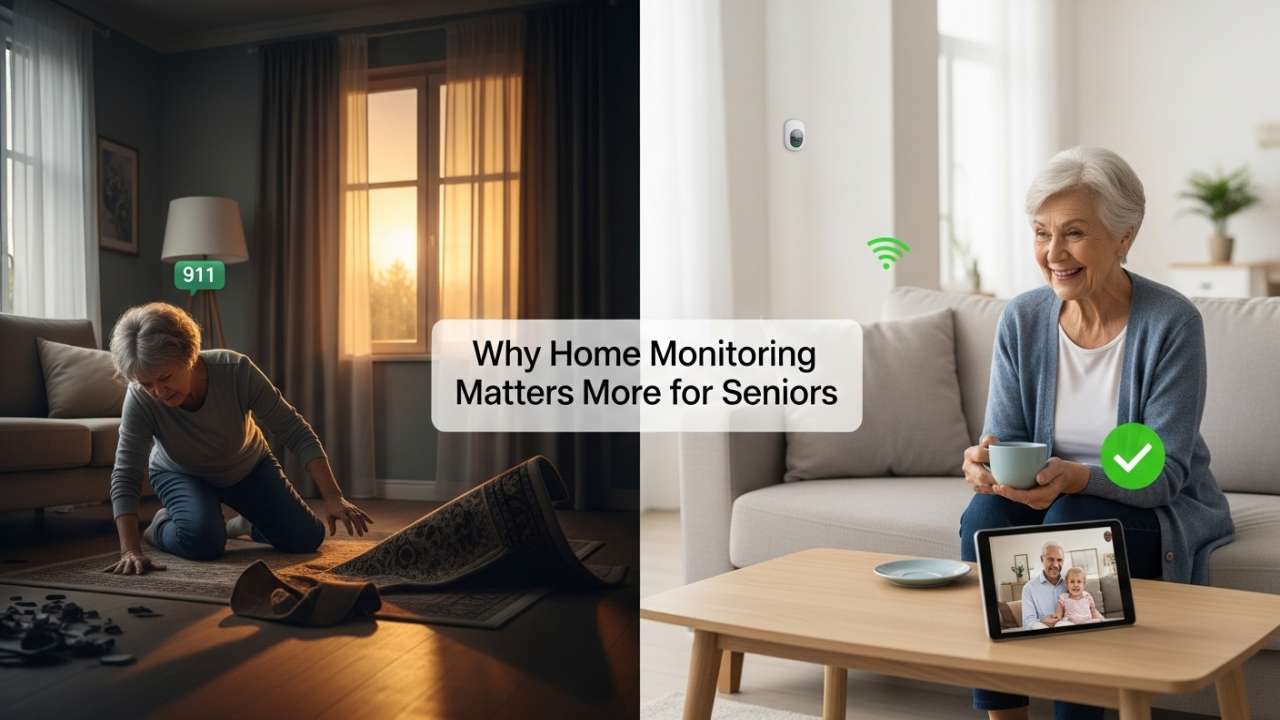
Doctors often call the jump from office visits to home readings “the missing data”. When you check your blood pressure once every few months at a medical appointment, you’re getting a snapshot. Home monitoring gives you the full picture.
Research shows that regular home monitoring leads to better blood pressure control, especially in the first few months. The American Heart Association recommends it for anyone diagnosed with hypertension. But for seniors, it’s even more critical—because managing blood pressure early can prevent strokes, heart attacks, kidney disease, and vision loss.
Here’s what makes a difference:
- Twice-daily readings reveal patterns your doctor wouldn’t see otherwise
- Tracking over weeks and months shows whether the medication is working
- Daily awareness helps you catch spikes early
- Empowerment comes from seeing your own progress
Also Read:- Best Health Monitoring Devices for Seniors in USA – Complete Guide 2026
What Makes a Blood Pressure Monitor “Senior-Friendly”?
Not all monitors are created equal. We evaluated dozens based on what actually matters to older adults:
| Feature | Why It Matters | What to Look For |
|---|---|---|
| Large, backlit display | Aging eyes need clarity, especially in dim light | Numbers at least 0.5″ tall, automatic backlight |
| One-button operation | Fewer buttons = fewer mistakes | Automatic inflation; minimal menus |
| Comfortable, adjustable cuff | A tight cuff hurts; a loose one gives wrong readings | Fits arm sizes 8″ to 17″ circumference |
| Memory storage | Tracking matters; handwritten notes get lost | At least 60 readings stored; ideally 2 users |
| Accuracy validation | FDA approval or clinical validation matters | Look for “clinically validated” in specs |
| Voice feedback | Some seniors have vision challenges | Clear verbal readout of numbers |
| No app required | Simplicity wins | Works without smartphone or internet |
Top Blood Pressure Monitors for Seniors in 2026
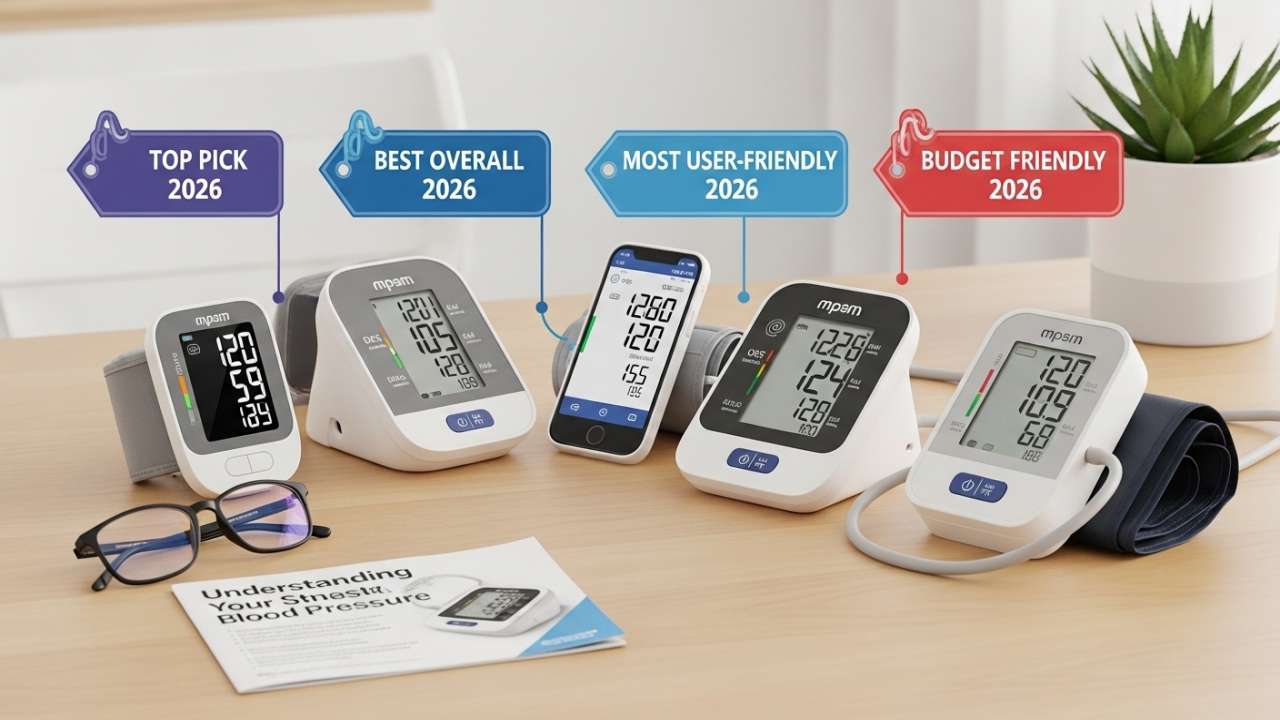
1. Omron Evolv BP7000: Best Overall for Ease of Use
The Omron Evolv stands out because it’s genuinely intuitive. No tubes dangling from a separate device. No confusing menu screens. Just a cuff you put on, one button to press, and clear numbers on a screen.
What makes it special:
- Integrated design: The monitor sits inside the cuff itself—nothing to hold or fumble with
- Fast readings: Takes about 30 seconds for a complete measurement
- Dual user profiles: You and your spouse both get your own history
- Bluetooth optional: Connects to an app if you want, but doesn’t require it
- Large display: Numbers are genuinely easy to read, even without glasses
Real testers at AARP—mostly people over 60—called it “the clearest screen I’ve tried” and praised how “there’s no guessing when looking at my results.”
Price range: $90–$110
Best for: Anyone who wants zero complexity; anyone frustrated by multiple cuffs and displays
Also Read:- Best Medical Alert Systems for Seniors 2026 | Reviewed & Compared
2. A&D Medical UB-525: Best Budget-Friendly Option
Not everyone needs fancy features. The A&D Medical UB-525 proves that an accurate, simple monitor doesn’t have to break the bank.
Why it works:
- One-button simplicity: Press once, get a reading
- Large numbers: Perfect for vision challenges
- Wide cuff range: Fits nearly everyone (8.6″ to 16.5″ arms)
- Gentle inflation: Comfortable, not tight or startling
- Five-year warranty: Shows the manufacturer’s confidence
- Clinically validated: Accuracy you can trust
The downside? No memory storage—you write down results yourself. But for seniors who want reliability without confusion, this is unbeatable.
Price range: $30–$50 (the real deal—legitimately affordable)
Best for: Seniors on tight budgets; people who prefer not to rely on electronics for memory
3. Omron Platinum BP5450: Best for Accuracy + Features
If you’re serious about tracking—multiple readings daily, comparing trends over weeks—the Omron Platinum delivers clinical-grade precision without overcomplicating things.
Key advantages:
- Triple-check technology: Takes three readings and averages them (eliminates flukes)
- Extra-large screen: One of the biggest displays on the market
- Dual LCD screens: See current and previous readings side-by-side
- 200 readings per user: Two users, so you and a partner both stay on top of it
- Bluetooth connectivity: Syncs with the Omron app for people who want digital tracking
- Arrhythmia detection: Flags irregular heartbeats automatically
The Omron Platinum is what cardiologists recommend when they want patients to get serious about monitoring.
Price range: $80–$120
Best for: People with diagnosed hypertension; anyone who wants detailed history; couples monitoring together
Also Read:- GPS Tracking in The Villages, Florida: Senior Safety Complete Guide for Active Retirees
4. Beurer BM55: Best for Senior-Specific Design
Beurer designed this monitor with seniors in mind—not as an afterthought. Every feature aims at older adults’ actual needs.
Why seniors love it:
- XL backlit display: The largest numbers in this comparison
- 60 readings per user: Two-user memory lets families track together
- Automatic inflation technology: Gentle and comfortable; no squeezing sensation
- Color-coded risk indicator: Green, yellow, or red immediately tells you if you’re in safe range
- WHO classification scale: Shows where your BP falls on the global health scale
- Arrhythmia detection: Alerts you to potential heart rhythm issues
- Voice announcements: Helpful for users with vision impairment
This is the monitor your doctor might actually recommend specifically because it’s designed for older adults.
Price range: $70–$100
Best for: Seniors prioritizing ease and visibility; anyone with vision or dexterity challenges
5. Greater Goods Smart BP Cuff: Best Portable Option
Travel to see grandkids? Take it with you. Checking BP at your daughter’s house? Perfectly portable. The Greater Goods is compact without sacrificing accuracy.
Why it works for travel:
- Compact and lightweight: Throws in a bag without trouble
- Portable storage: 60 readings stored; access your history even away from home
- Simple operation: One-step inflation; minimal buttons
- Battery efficient: 4 AAA batteries last months
- Smart app sync: Optional—works fine without it
- Affordable pricing: Solid quality without premium cost
For active seniors who don’t sit still, this is the monitor that keeps up.
Price range: $60–$90
Best for: Seniors who travel; people who want portability; anyone who’d benefit from a smaller, lighter cuff
Which Monitor Is Right for You?
| Monitor | Best For | Price | Display | Memory | Key Strength |
|---|---|---|---|---|---|
| Omron Evolv BP7000 | Want simplicity | $90–$110 | Large, clear | 2 users | Integrated design, intuitive |
| A&D UB-525 | Budget-conscious | $30–$50 | Big numbers | Manual | Rock-solid accuracy, affordable |
| Omron Platinum BP5450 | Want detailed tracking | $80–$120 | Extra-large, dual | 2 users x200 | Triple-check, comprehensive |
| Beurer BM55 | Senior-specific needs | $70–$100 | XL backlit | 2 users x60 | Designed for older adults |
| Greater Goods Smart | Frequent travelers | $60–$90 | Clear LCD | 60 readings | Portable, lightweight |
How to Get the Most Accurate Readings
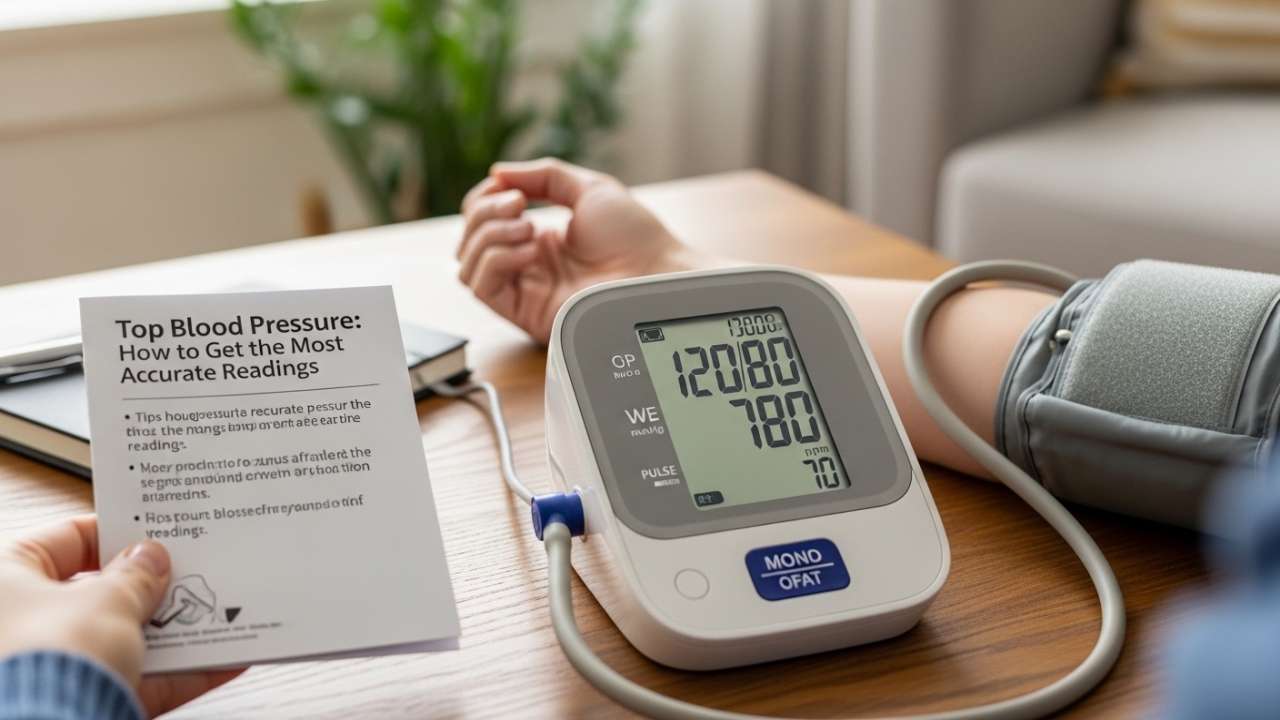
A monitor is only as good as how you use it. Here’s exactly how to take readings that actually matter:
Before you measure:
- Rest for 5 minutes in a quiet spot
- Empty your bladder (full bladder raises readings)
- Avoid caffeine for 30 minutes before
- Don’t check right after exercise or stress
While measuring:
- Sit with feet flat on the floor
- Rest your arm at heart level (on a table, not hanging down)
- Keep the cuff snug but not tight—you should fit a finger under it
- Stay quiet; don’t talk during the reading
- Wear the cuff directly on skin or over a thin sleeve, never over thick fabric
When to check:
- Morning: before medication, before breakfast
- Evening: about 12 hours after the morning reading
- Ideally, take 2–3 readings each time, spaced a minute apart
- Record all readings; don’t cherry-pick the lowest ones
What the numbers mean:
- Normal: Less than 120/80 mmHg
- Elevated: 120–129/<80 mmHg
- High blood pressure Stage 1: 130–139/80–89 mmHg
- High blood pressure Stage 2: 140 or higher/90 or higher mmHg
These thresholds follow American Heart Association guidelines, which doctors use nationwide.
Also Read:- Medical Alert Systems The Villages, Florida: The Complete 2026 Guide for Active Villagers
Common Mistakes That Ruin Your Readings
Even the best monitor gives bad results if you use it wrong. Here’s what to avoid:
The rush check: Taking a reading right after you wake up, before you’ve moved around, while stressed about the day ahead. Your BP is naturally elevated when you’re tense.
The tight cuff: A cuff that’s too snug (no breathing room) squeezes the artery and inflates your reading by 10+ points.
The loose cuff: A cuff that’s too loose won’t compress the artery properly, giving falsely low readings.
The moving arm: Talking, moving your arm, or fidgeting during the measurement makes readings jump wildly.
The inconsistent timing: Checking randomly at different times of day makes it impossible to see real patterns. Consistency matters more than perfection.
FAQ: Everything Seniors Ask About Home BP Monitors
Q: How often should I check my blood pressure?
A: If you have high blood pressure, the American Heart Association recommends twice daily—once in the morning (before medication) and once in the evening. Take at least 2–3 readings each time, spaced a minute apart, and average them. For people with normal BP, once daily is often enough.
Q: Do I really need to write down all my readings?
A: If your monitor has memory storage, it automatically records them. But sharing your readings with your doctor is key. Either bring in your device, write them down, or use an app to log them. Your doctor needs to see patterns over weeks and months.
Q: Wrist monitors are more convenient. Are they accurate?
A: The American Medical Association and American Heart Association don’t recommend wrist monitors—and here’s why: they’re only accurate if your wrist is at exact heart height, which is hard to maintain. Arm cuff monitors are the gold standard because gravity and positioning don’t throw them off.
Q: My readings are different every time. Should I worry?
A: Small variations are normal—your BP changes throughout the day based on stress, food, caffeine, sleep, and activity. That’s exactly why home monitoring matters. One high reading isn’t a crisis; a pattern of high readings is what you discuss with your doctor.
Q: Can I use a family member’s monitor?
A: Yes, if it has dual-user profiles (storage for two separate histories). But many monitors have only one user. Check the specs. And remember: cuff fit matters. A cuff sized for someone with a large arm might not fit snugly on a smaller arm.
Q: Do I need Bluetooth and an app?
A: No. Bluetooth is convenient for tracking if you’re tech-comfortable, but it’s not essential. Many seniors get better results with simple, no-app-required monitors. Choose based on your comfort level, not what feels trendy.
Q: My doctor says my home readings are different from the office. Which is more accurate?
A: Home readings are often more accurate because you’re relaxed and in a familiar setting. “White coat syndrome”—where seeing a doctor makes your BP spike—is very real. Your doctor will likely trust your home readings more, especially if they’re consistent over time.
Q: How long do monitors last?
A: Good monitors typically last 5–10 years with proper care. Avoid dropping them, exposing them to extreme heat/cold, or getting them wet. Cuffs wear out faster than the electronic unit—many manufacturers sell replacement cuffs.
Q: Is FDA approval important?
A: Yes. FDA-cleared or clinically validated monitors have been tested for accuracy. Look for this on the box or in product descriptions. Avoid unknown brands without validation.
Final Thoughts: Start Today
The scariest part about high blood pressure isn’t the diagnosis—it’s not knowing you have it. A $50–$100 monitor sitting on your nightstand becomes your personal early warning system.
You don’t need the fanciest monitor. You need one that actually gets used. The best monitor is the one you’ll check consistently, understand easily, and trust completely.
Start today. Pick one from this guide. Take that first reading. Write it down. And in two weeks, you’ll have real data about your heart health.
Your future self will thank you.