Caring for an elderly loved one in Florida brings a unique set of challenges that families in other states simply do not face in the same way. The sheer scale of Florida’s retirement communities, the miles of open beach coastline, the intense subtropical heat, and the reality that many Florida seniors live independently in communities specifically designed for active aging — all of these factors combine to make location safety a genuinely pressing concern for families and caregivers across the state.
If your parent, grandparent, or spouse has dementia, Alzheimer’s, or any condition that affects memory and orientation, the words “they wandered off” carry a particular weight in Florida. The Villages alone covers more than 32 square miles. Gulf-facing beaches stretch for miles with no natural barriers. Summer heat regularly exceeds 95 degrees with humidity that makes it feel closer to 110. A senior who becomes disoriented outdoors in those conditions faces real danger within a surprisingly short window of time.
A GPS tracker for elderly in Florida is not about surveillance. It is not about taking away independence or treating a person like a child. Used correctly and respectfully, it is about giving your loved one the freedom to live their life while giving you the ability to find them quickly if something goes wrong. For millions of Florida families, that peace of mind is genuinely priceless.
This guide covers everything you need — the best devices available in 2026, the specific Florida challenges each one addresses, how to talk about tracking with your loved one, how to set everything up, and honest answers to the questions families ask most often.
Why Florida Creates Unique Wandering Risks
To understand why a GPS tracker for elderly Florida families rely on needs to be chosen carefully rather than just grabbing the cheapest option online, you need to understand what makes Florida different from a location-safety standpoint.
The Villages Problem
The Villages in central Florida is the largest retirement community in the world. It covers more than 32 square miles across three counties, contains over 130,000 residents, and has an internal road system so extensive that even longtime residents occasionally get genuinely lost. Golf cart paths crisscross the community for dozens of miles. A senior with early to mid-stage dementia living in The Villages can wander far enough in a golf cart or on foot to be genuinely difficult to locate without a tracking device. The community’s size, which is one of its great appeals for active seniors, becomes a genuine safety challenge when orientation is compromised.
Also Read:- Fall Detection Devices Florida Seniors: The Complete 2025 Guide
Beach Wandering Concerns
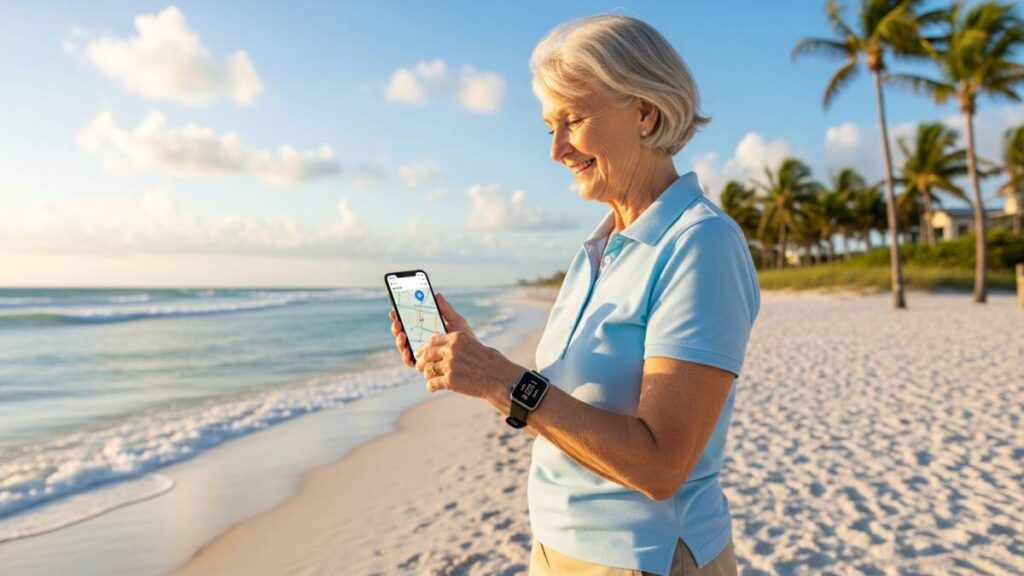
Florida’s coastline adds a dimension of risk that inland communities do not face. A disoriented senior walking toward the sound of water on a beach has few natural stopping points. Gulf beaches in particular are flat, wide, and can stretch for miles with no features to aid orientation. Ocean currents near shore are a real danger. And finding one person on a busy Florida beach in peak tourist season is genuinely difficult without knowing approximately where they are.
Heat as a Time Factor
In most states, a wandering senior has time on their side in mild weather. In Florida from May through October, that window shrinks dramatically. Heat-related illness can develop in a disoriented elderly person within 30 to 45 minutes of outdoor exposure in peak summer conditions. This makes the speed of location — the difference between finding someone in 10 minutes versus 2 hours — potentially life or death rather than just inconvenient. Your GPS tracker for elderly Florida use needs to provide real-time location, not hourly check-ins.
Golf Cart Mobility
Florida retirement communities use golf carts as primary transportation in a way that is unique in America. A senior who would not attempt to walk very far may happily drive a golf cart for miles before becoming disoriented. Traditional wandering assumptions about walking speed and distance do not apply in golf-cart communities. Your tracking solution needs to account for vehicle-speed movement, not just walking pace.
The 7 Best GPS Trackers for the Elderly in Florida
1. AngelSense
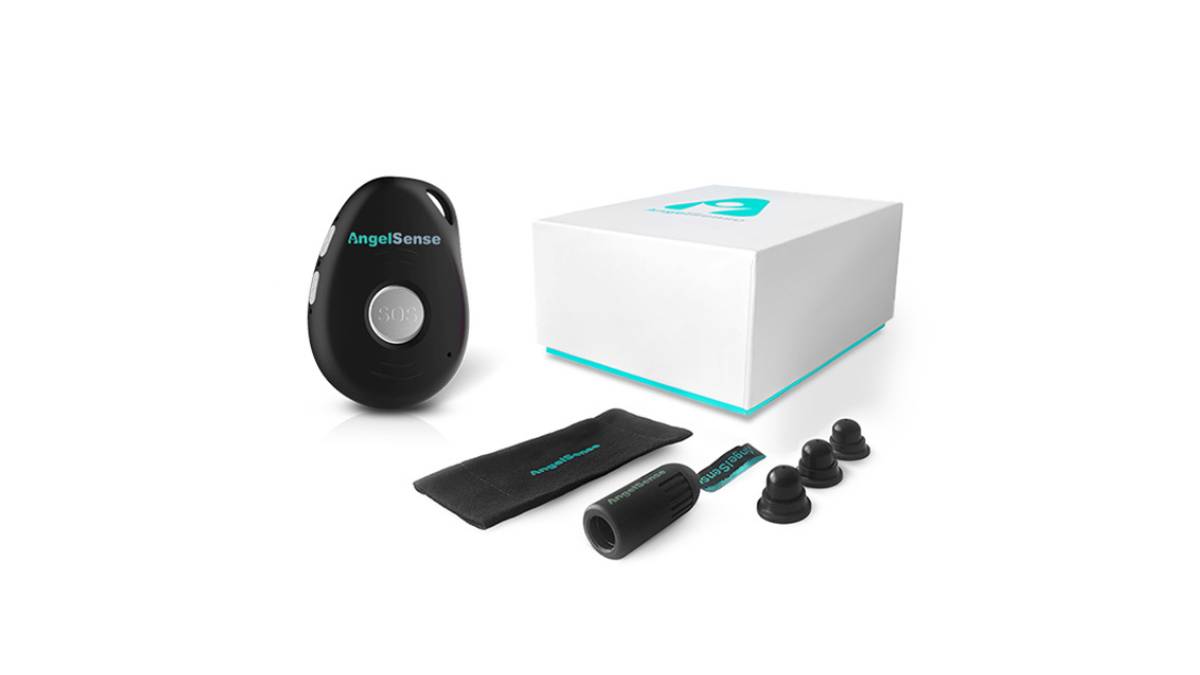
AngelSense is built from the ground up for exactly the use case that Florida families of dementia patients face, and it shows in every feature. This is not a repurposed fitness device or a Bluetooth tag — it is a dedicated personal GPS tracking system designed specifically for individuals who cannot manage the device themselves.
The real-time GPS updates every 10 to 60 seconds, which is the fastest refresh rate of any dedicated personal tracker on this list. That speed matters enormously in Florida’s heat — knowing where your loved one is right now rather than where they were six minutes ago is the difference that matters in a true emergency. Geofencing is built in with customizable zones, so you receive an immediate alert the moment your loved one leaves a defined safe area like The Villages golf cart community or your neighborhood.
AngelSense includes a listen-in feature that allows caregivers to hear what is happening around the device — useful for assessing whether a loved one sounds distressed or confused before you arrive. The device attaches with a tamper-resistant clip or sewn-in pouch that is specifically designed to prevent removal by a person with dementia who does not understand why they are wearing it. It is rated for heat resistance suitable for Florida outdoor conditions and has a solid all-day battery with charging alerts. Monthly subscription runs approximately 35 to 40 dollars. For Florida families managing dementia, AngelSense is the most purpose-built option available in 2026.
2. Jiobit
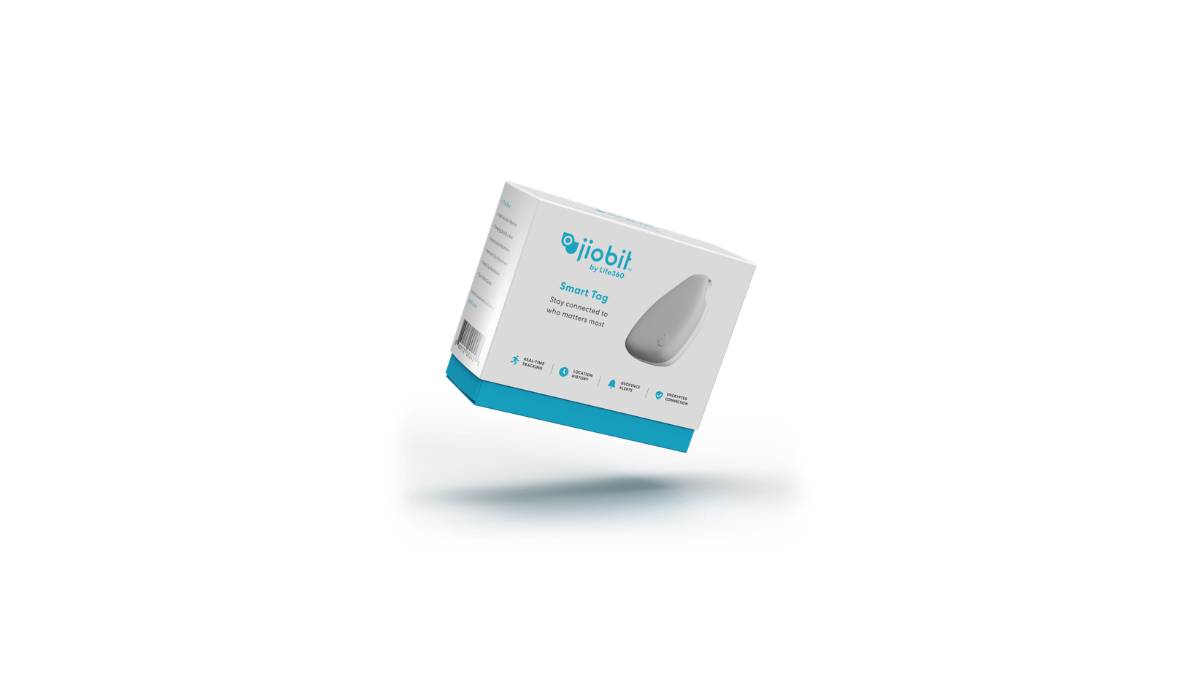
Jiobit is a compact, lightweight tracker that has earned a devoted following among Florida caregiving families for its combination of size, durability, and location accuracy. The device is small enough to clip onto a belt loop, attach to a shoe, or slide into a small pouch sewn into clothing without being obvious or uncomfortable for the wearer.
What separates Jiobit technically from many competitors is its use of multiple location technologies simultaneously — GPS, WiFi, cellular, and Bluetooth all working together to maintain location accuracy even indoors, in parking garages, and in the concrete-heavy environments of large Florida retirement community centers where GPS signal alone can be unreliable. For a senior who spends time moving between indoor common areas and outdoor spaces throughout the day, this multi-technology approach provides more consistent tracking than GPS-only devices.
The geofencing feature sends immediate push notifications when boundaries are crossed, and the location history playback allows caregivers to review exactly where a loved one traveled throughout the day — useful for understanding wandering patterns and identifying concerning new behaviors. Battery life runs approximately 7 days on a single charge, significantly longer than most competitors. Jiobit is water resistant to IPX7 standards, appropriate for Florida’s frequent afternoon rainstorms. Subscription costs approximately 13 to 20 dollars monthly making it one of the more affordable options with professional-grade performance. A strong choice for a gps tracker elderly Florida families want discreet and durable.
3. Tile Pro
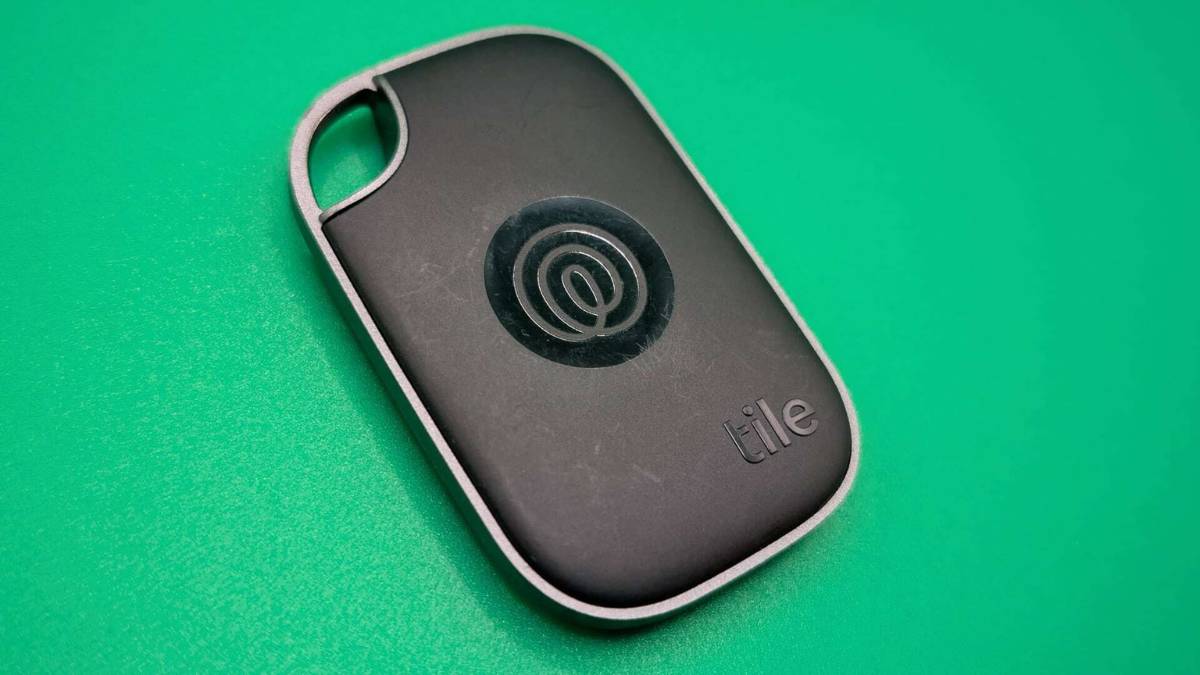
Tile Pro occupies a different category from the dedicated personal trackers above — it is a Bluetooth-based finding device rather than a cellular GPS tracker, and that distinction matters enormously for understanding when it is and is not the right tool.
Tile Pro works by maintaining a Bluetooth connection to your smartphone when you are within approximately 400 feet, and by using the anonymized Tile network — millions of Tile users whose phones detect your tile and report its location — when you are out of Bluetooth range. In a densely populated Florida retirement community with many Tile users, the network effect can be quite useful for locating a device. In a rural Florida area or on a long stretch of beach with sparse foot traffic, the network becomes sparse and reliability drops.
The honest assessment is that Tile Pro is appropriate as a supplementary device for early-stage memory concerns in community settings, or attached to frequently lost items like wallets and keys. It is not appropriate as a primary safety device for a loved one with moderate to advanced dementia in Florida’s outdoor environments. The lack of real-time cellular GPS, the dependence on network density, and the inability to set geofence alerts all make it insufficient for serious wandering risk management. At around 35 dollars with no required subscription for basic features, it is a useful addition to a broader safety toolkit but not a standalone solution for Florida’s specific challenges.
4. Apple AirTag
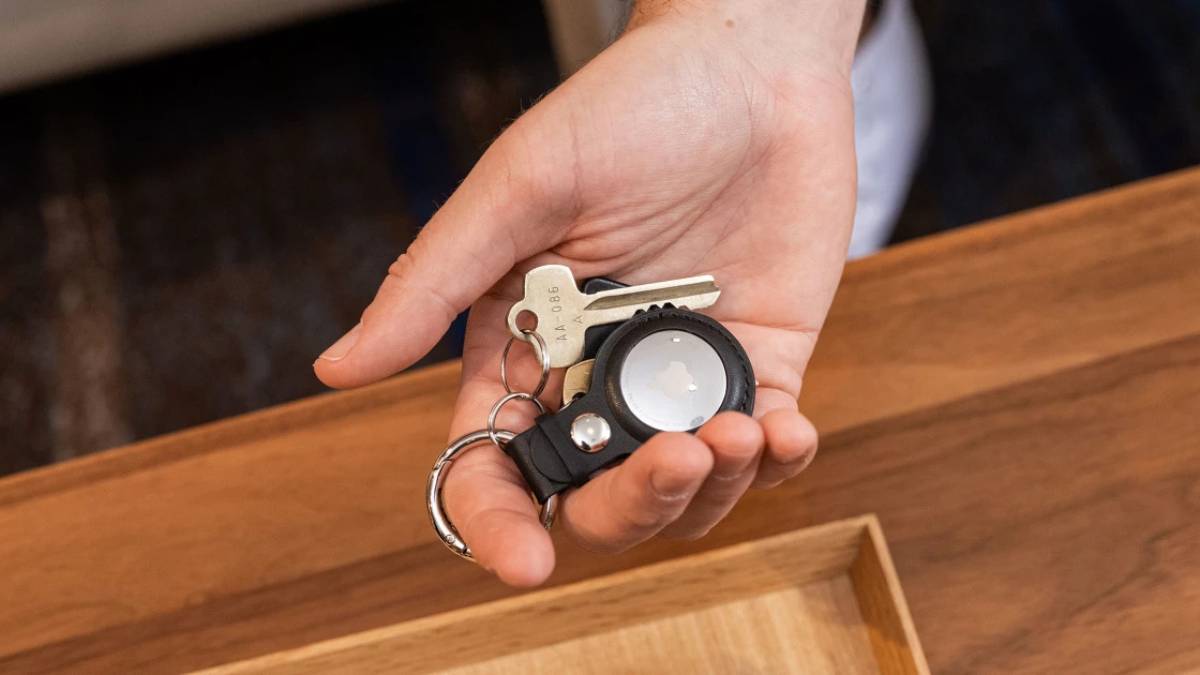
Apple AirTag operates on the same fundamental technology as Tile Pro — it uses Bluetooth and the Find My network of Apple devices to report location — and carries the same honest limitation for serious dementia tracking purposes. The Find My network is enormously dense in Florida’s populated areas, which does give AirTag a network advantage over Tile Pro in urban and suburban retirement communities. A lost AirTag in a Florida city with millions of iPhones nearby will be located quickly as long as it stays in populated areas.
The Precision Finding feature, available on newer iPhone models, uses ultra-wideband technology to guide you within feet of the tag’s location once you are nearby — genuinely impressive technology that makes the final search much faster than other Bluetooth trackers.
However, the same core limitation applies. There is no cellular GPS, no real-time location streaming, no geofencing with instant alerts. An AirTag on a loved one who has wandered from a Florida beach to a quiet stretch of undeveloped coastline will be invisible until another Apple device passes nearby. For Florida families with a loved one in early memory stages who lives in a densely populated community, AirTag at around 29 dollars is a practical low-cost option. For any situation involving genuine wandering risk in Florida’s outdoor environments, it should not be the primary solution.
5. Samsung SmartTag 2
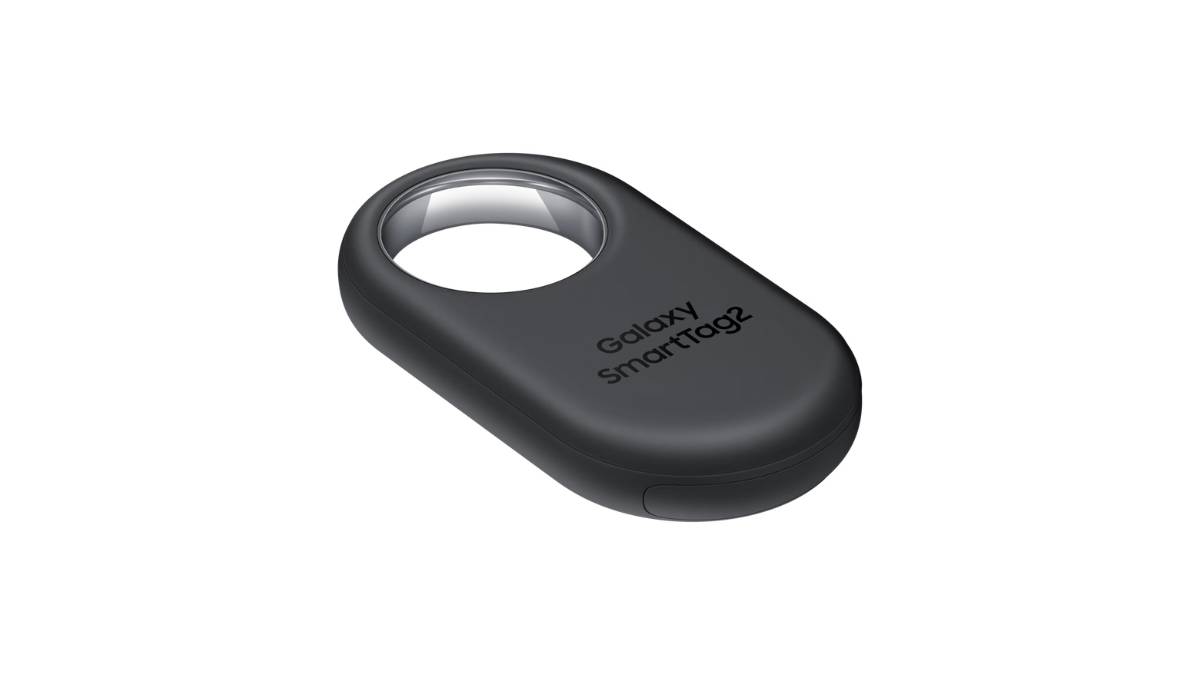
Samsung SmartTag 2 is the Android ecosystem equivalent of Apple AirTag, and it is worth considering for Florida families whose household runs on Samsung or Android devices. The SmartTag 2 uses Bluetooth and Samsung’s SmartThings Find network, which in Florida’s large Samsung-using population delivers reasonable network density in populated retirement communities and urban areas.
The SmartTag 2 includes an Ultra-Wideband option on compatible Samsung devices for precision finding similar to AirTag’s capability, and battery life of up to 6 months on a single coin cell battery is outstanding — eliminating the charging worry that comes with cellular trackers. It is IP67 rated, fully waterproof for Florida’s rain and pool environments.
The honest assessment mirrors AirTag. For tracking wallets, bags, and belongings or as a supplement to a primary cellular tracker on a loved one with very mild memory concerns in a densely populated community, SmartTag 2 works well. For active wandering risk management in Florida’s outdoor environments, the absence of real-time GPS and geofencing makes it insufficient as a standalone safety device for moderate to advanced dementia.
6. Trackimo
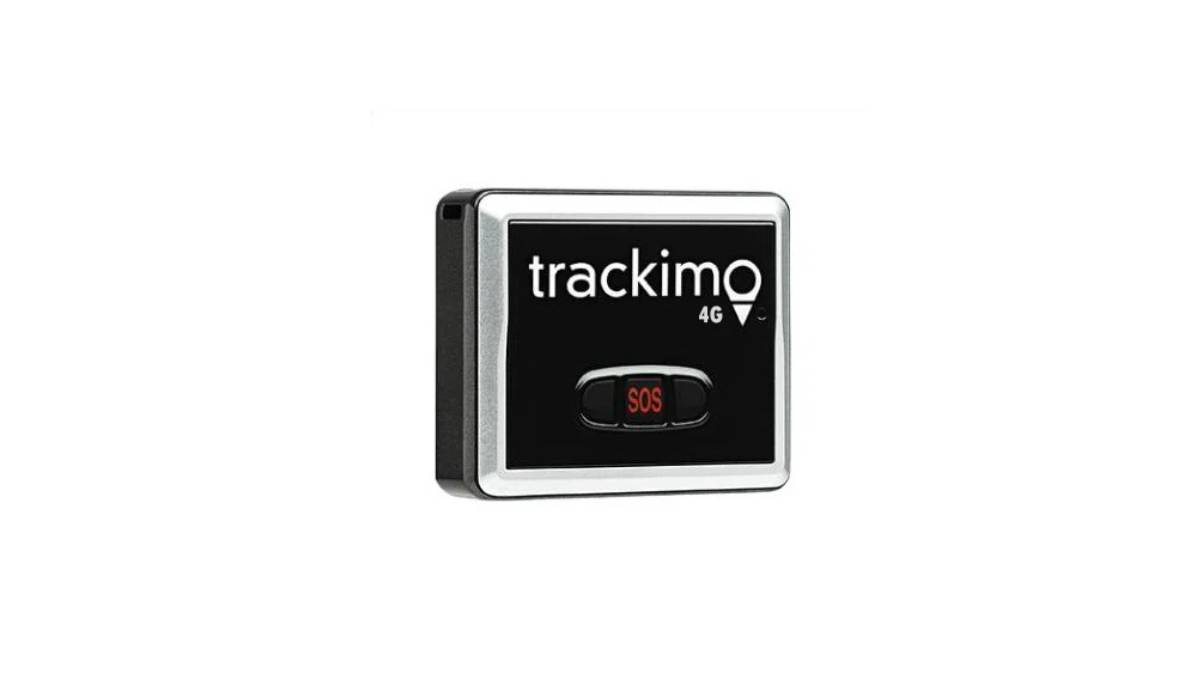
Trackimo is a cellular GPS tracker that occupies an interesting middle ground in the market — it offers genuine real-time GPS tracking with geofencing capabilities at a price point significantly below AngelSense, with a device that is small enough to be attached discreetly to clothing, a bag, or worn on a lanyard.
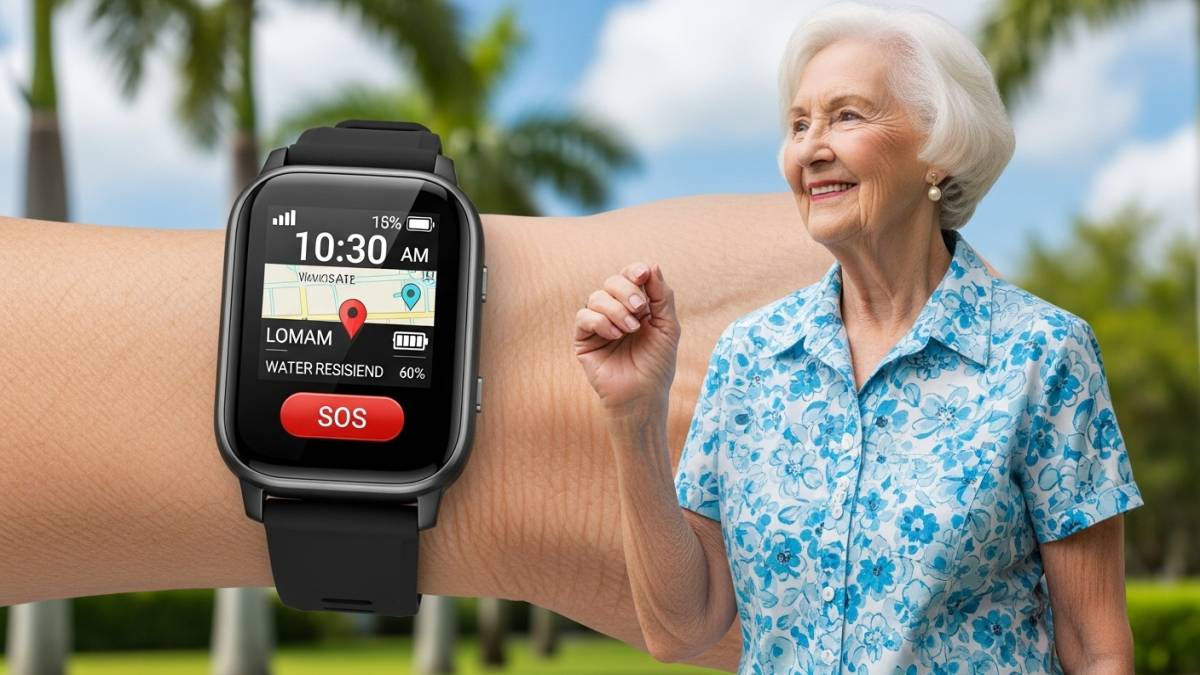
Location updates every 60 seconds via cellular GPS make Trackimo a true real-time tracking device rather than a Bluetooth dependent network solution. Coverage uses global cellular networks with strong coverage across Florida including rural areas near the state’s many natural areas and beaches. Geofence zones can be set from the smartphone app with push notification alerts when boundaries are crossed, and location history is stored for review.
Battery life of approximately 3 to 5 days on a single charge is shorter than ideal but manageable with a consistent charging routine. The device is water resistant at IPX4 — splash proof but not submersible, which is a limitation to be aware of for beach environments or poolside use in Florida. Subscription costs run approximately 8 to 15 dollars monthly after the first year, making Trackimo one of the more affordable cellular GPS options available. A solid and practical gps tracker for elderly Florida families working within tighter budgets who still need real cellular GPS performance.
7. PocketFinder
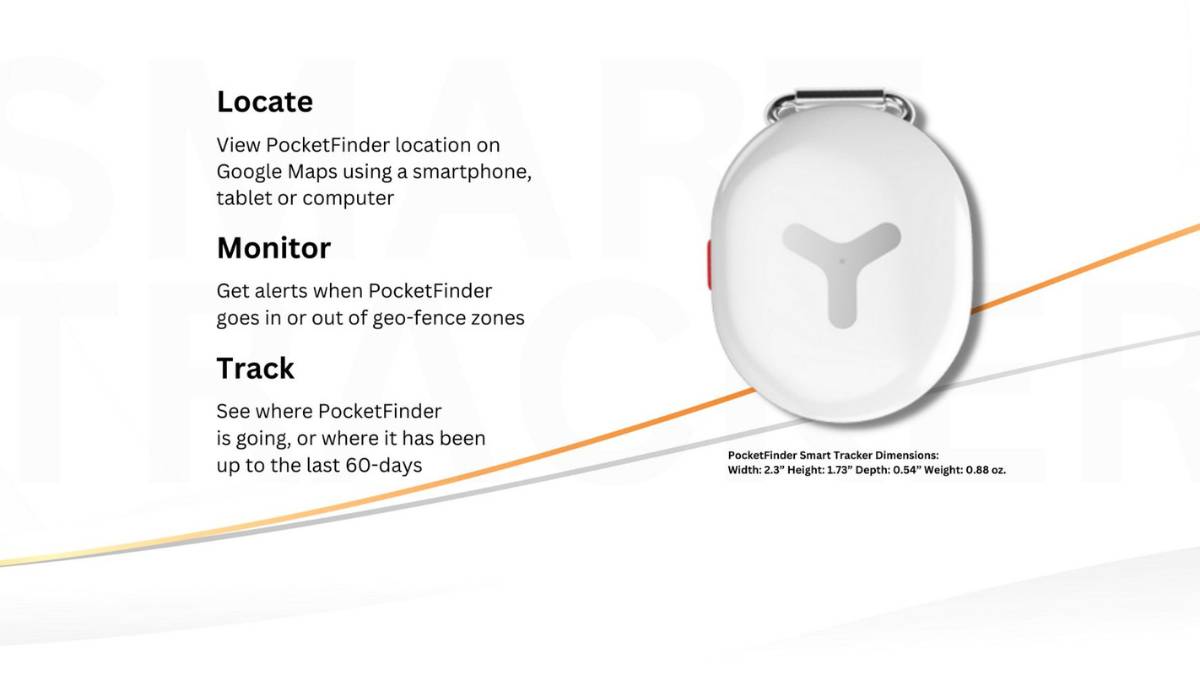
PocketFinder has been in the personal GPS tracking market longer than most competitors and has built its reputation specifically in the elderly tracking and child safety categories. The device is slightly larger than newer competitors but that size accommodates a robust battery that delivers up to 100 hours of battery life in standard tracking mode — a meaningful advantage for families who worry about charging compliance or for seniors who spend extended time away from home.
Real-time GPS with cellular connectivity provides location updates and geofencing alerts similar to Trackimo, with reliable coverage across Florida’s cellular network. The PocketFinder app is intentionally designed to be simple for family members who are not particularly tech-comfortable, with large text displays and a straightforward map interface that shows location clearly without overwhelming features.
The device’s size does make discreet wearability slightly more challenging than newer compact trackers, but it attaches reliably to a belt, bag, or lanyard and the robust battery life arguably compensates for the size difference. At around 30 dollars for the device with subscription plans around 13 dollars monthly, PocketFinder delivers dependable performance for families who prioritize battery autonomy and ease of app use over maximum compactness.
Also Read:- Elderly Care Technology in Florida: Transforming Senior Lives in the Sunshine State
Essential Features for Florida Conditions
When evaluating any GPS tracker elderly Florida families consider, these are the non-negotiable features that Florida’s specific environment demands.
Real-time GPS updates faster than every 5 minutes are essential in Florida’s heat. Knowing where someone was 10 minutes ago is not sufficient when heat illness can develop in 30 minutes.
Geofencing with immediate push alerts allows you to set a virtual boundary around a safe zone and receive notification the moment it is crossed, letting you act before a situation becomes an emergency.
Waterproofing of at least IPX7 or IP67 is necessary in a state with daily afternoon thunderstorms, beach proximity, pool access, and high humidity that can damage electronics rated only for splash resistance.
Battery life of at least 3 days with low-battery alerts prevents the dangerous gap that occurs when a device dies unknowingly. The best options for Florida deliver 5 to 7 days between charges.
Heat resistance matters. Devices left in Florida vehicles or outdoor conditions can reach temperatures of 130 to 150 degrees. Verify that any device you consider is rated for high-temperature environments before purchasing.
Ethics, Privacy, and Dignity
Using a GPS tracker for elderly loved ones raises real ethical questions that deserve honest consideration rather than dismissal.
The starting point should always be consent and transparency whenever cognitively possible. If your loved one has early-stage memory concerns and can meaningfully participate in a conversation about tracking, have that conversation. Explain what the device does, why you are suggesting it, and what you will and will not do with the information. Many seniors, when approached respectfully and given real information, agree to tracking because they understand it supports their independence rather than restricting it.
For loved ones with moderate to advanced dementia who cannot meaningfully consent, the ethical framework shifts to best-interest decision making, guided by their known values and wishes expressed before cognitive decline. Most dementia care ethicists support GPS tracking in this context as a safety intervention that is far less restrictive than the alternative, which is often placement in a locked memory care facility.
The key principles are using location data only for safety purposes, not sharing it beyond direct caregivers, never using tracking as a substitute for meaningful engagement and care, and revisiting the arrangement regularly as your loved one’s condition and preferences evolve.
Also Read:- Best Medical Alert Systems for Florida Seniors: Complete 2026 Guide
Set up and Attachment for Florida Use
Attachment method matters significantly for Florida conditions. A device that falls off during a beach walk or golf cart ride provides no protection at all.
Shoe attachment using a lace or velcro pouch is among the most reliable methods because shoes are worn consistently and the device stays low profile. Specially designed shoe pouches from AngelSense and Jiobit make this attachment simple and secure.
Belt clip or loop attachment works well for mobile seniors who consistently wear belted clothing. Combine with a safety tether for additional security.
Sewn-in clothing pouches, available as accessories for AngelSense and craftable from small nylon pouches for any device, eliminate the removal issue entirely for loved ones with dementia who might otherwise take off worn accessories.
Test your complete setup during a routine outing before relying on it in a real situation. Verify the geofence alert fires correctly, confirm the app shows accurate real-time location, and check that the device survived a full day of Florida heat and activity before trusting it for safety.
Frequently Asked Questions
Can a GPS tracker withstand Florida’s heat inside a parked car?
Most quality trackers are rated to operate safely up to 140 to 158 degrees Fahrenheit. Florida car interiors can exceed 150 degrees in summer sun. Avoid leaving any tracker inside a parked vehicle during summer months, and verify your specific device’s operating temperature rating before assuming heat tolerance.
Will GPS trackers work throughout The Villages golf cart community?
Cellular GPS trackers including AngelSense, Jiobit, and Trackimo work throughout The Villages, which has strong cellular coverage across its 32-square-mile footprint. Bluetooth-only devices like AirTag work reliably in The Villages’ densely populated areas where network density is high.
How do I bring up GPS tracking with a parent who values independence?
Frame it around their independence rather than your fear. Explain that having a tracker means they can continue living independently and doing activities they enjoy because you have a safety net in place. Many seniors respond better when they understand the alternative conversation is about whether they should continue living independently at all.
Is there a GPS tracker that works on golf carts specifically?
Any of the cellular GPS trackers in this guide can be placed in a golf cart storage compartment or attached to the cart structure. The real-time GPS will track movement at golf cart speeds accurately. This is particularly useful in communities like The Villages where golf cart wandering covers more distance than walking.
What happens to GPS tracking accuracy on Florida beaches?
Cellular GPS performs well on open beaches with clear sky exposure — the open sky actually improves GPS satellite lock compared to urban environments. The limitation on beaches is cellular coverage, which is excellent on developed beach areas near communities but may degrade in more remote coastal stretches.
How do I know if the subscription service will remain active and reliable?
Stick with established companies that have been operating for at least 3 to 5 years and have verifiable customer bases. AngelSense, Jiobit, and Trackimo all meet this standard. Avoid no-name trackers on discount sites that may have unreliable network infrastructure or disappear from the market and leave devices non-functional.
Conclusion and Recommendations
For Florida families dealing with genuine dementia wandering risk, AngelSense is the clear top recommendation. Its purpose-built design, fastest refresh rates, tamper-resistant attachment options, and listen-in feature address Florida’s specific challenges more comprehensively than any other device on this list. The higher subscription cost reflects genuine capability that matters in real emergencies.
For families wanting strong performance at a more accessible price point, Jiobit delivers professional-grade multi-technology tracking with outstanding battery life at a fraction of AngelSense’s subscription cost.
For early-stage memory concerns in densely populated Florida retirement communities where wandering risk is low, Apple AirTag or Samsung SmartTag 2 offer low-cost entry points with the understanding of their Bluetooth network limitations.
For budget-conscious families who still need real cellular GPS, Trackimo and PocketFinder both deliver honest performance at the lowest subscription costs in the cellular category.
Whatever device you choose, choose one. In Florida’s heat, on its beaches, and across the extraordinary scale of its retirement communities, a GPS tracker for elderly Florida loved ones is not an overreaction. It is a reasonable, respectful, and potentially life-saving decision that thousands of Florida families have already made — and are glad they did.